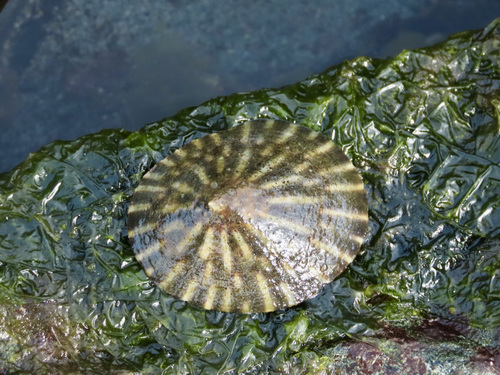
Plate Limpet
Lottia scutum
The Plate Limpet is the unsung architect of the rocky shoreline, a master of suction that navigates the turbulent Pacific tides with surprising grace.
Quick Identification
Size
30-60 mm (1.2-2.4 inches) in length; height is typically 1/3 of the length
Colors
Mottled greenish-gray, brown, or off-white; interior is bluish-white with a dark brown owl-shaped central scar
Key Features
- Flattened, plate-like oval shell
- Fine radiating ribs often worn smooth
- Large, dark brown apical stain on the interior
- Tentacles are typically white or pale
When You’ll See Them
Geographic range
Where Does the Plate Limpet Live?
The Plate Limpet is a staple of the North Pacific coastline, stretching its native range from the Aleutian Islands in Alaska down through the coastal waters of British Columbia and the United States to northern Baja California, Mexico. This species thrives in the nutrient-rich, cold waters of the Pacific, where rocky outcroppings provide the stable substrate necessary for their survival. While primarily found along the mainland coast, they also inhabit various offshore islands within this temperate marine corridor.
Basemap © OpenStreetMap contributors
Behavior
The Plate Limpet is a fascinating intertidal resident known for its "homing" behavior, though it is less strictly tied to a single spot than other limpet species. During high tide or at night, it crawls across rocky surfaces to graze, using a specialized tongue-like organ called a radula to scrape microscopic algae and diatoms from the rock. As the tide recedes, it returns to a preferred resting spot where its shell fits the rock's contours perfectly, creating a seal that prevents desiccation.
Unlike many other mollusks, the Plate Limpet is quite active when submerged. It has evolved a low-profile, hydrodynamic shape that allows it to withstand the incredible force of crashing waves. While they appear sedentary to the casual observer, time-lapse photography reveals a creature that is constantly navigating its miniature mountain range of barnacles and seaweed in search of food.
EverydayEarth exclusive
Camera Tips
Capturing the Plate Limpet on camera requires a specialized approach since they inhabit the splash zone. Use a waterproof action camera with a dedicated macro lens or a high-quality underwater housing. Because limpets move very slowly, traditional video is often boring; instead, set your camera to time-lapse mode. Taking one frame every 30 to 60 seconds over a full tide cycle will reveal their complex grazing patterns and social interactions with other limpets.
Mount your camera as low as possible. A "gorilla-pod" or a weighted beanbag base works well for stabilizing the camera on uneven, slippery rocks. Position the lens just a few inches from a cluster of limpets during low tide, ensuring the camera is secure enough to withstand the incoming surge. Side-lighting from a waterproof LED can help highlight the texture of their shells and the movement of their muscular foot when they lift slightly to move.
Pay attention to the tide charts. The best footage is usually captured just as the tide begins to cover the rocks, as this is when the Plate Limpet "wakes up" and begins to forage. If you are filming in a tide pool, ensure the water is still and clear; using a circular polarizer filter can help cut through the surface reflection if the camera is positioned above the waterline. Be sure to rinse all your equipment in fresh water immediately after use to prevent salt corrosion.
Similar Species
Species that look similar or are commonly confused with Plate Limpet.
Frequently Asked Questions
Record Plate Limpet at your habitat
Connect a camera to start building your own species record — AI identifies every visitor automatically.