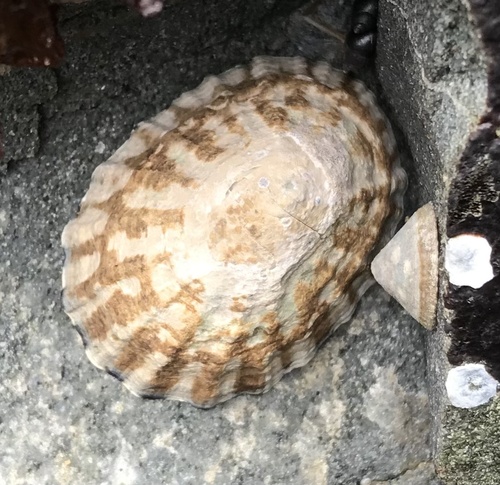
Shield Limpet
Lottia pelta
The Shield Limpet is a rugged survivor of the Pacific surf, known for its iconic ribbed shell and its remarkable ability to navigate back to a single 'home' spot on the rocks. A fascinating study in slow-motion survival, these mollusks are the unsung gardeners of the West Coast tide pools.
Quick Identification
Size
2.5–5 cm (1–2 inches) in length
Colors
Dull brown, gray, or greenish-black shell; often features white mottling or radiating light-colored stripes.
Key Features
- Broad, shield-shaped oval shell
- 20-40 radiating ribs that vary from prominent to nearly smooth
- Apex (peak) of the shell is positioned toward the front
- Interior of the shell usually has a dark, owl-shaped central stain
When You’ll See Them
Geographic range
Where Does the Shield Limpet Live?
Native to the rugged coastlines of the North Pacific, the Shield Limpet is a quintessential resident of the West Coast's rocky shores. Its geographic range extends from the frigid Aleutian Islands of Alaska, through the coastal waters of British Columbia, and down the entire Pacific coast of the United States. They are found as far south as the northern reaches of Baja California, Mexico, thriving wherever stable rocky substrates are available for attachment.
Basemap © OpenStreetMap contributors
Behavior
Despite their sedentary appearance, they are active defenders of their territory. If a predator like a sea star touches them, they can exhibit a 'flight' response, moving surprisingly fast for a snail to escape. They are also known to push or wedge other limpets away from their preferred grazing spots. Their muscular foot provides incredible suction, allowing them to withstand the massive force of crashing Pacific waves that would wash away most other animals.
EverydayEarth exclusive
Camera Tips
Lighting is crucial for marine gastropods. If you are filming in a deep tide pool or during an evening tide, use an external waterproof LED light set to a low, warm setting. This avoids the harsh glints off the wet shells that can confuse AI identification software. Position the camera at a 'profile' angle to the rock surface rather than directly top-down; this allows the AI to see the height and ribbing of the shell, which are key for distinguishing Lottia pelta from other limpet species.
Focus your lens on a 'home scar'—the light-colored ring on the rock where a limpet usually sits. If you start your recording while the limpet is away grazing, you can capture the incredible 'docking' procedure as it returns and fits itself back into its custom-made groove. Always remember to rinse your camera gear thoroughly with fresh water after salt-water exposure to prevent corrosion and keep the lens clear for future backyard beach discoveries.
Similar Species
Species that look similar or are commonly confused with Shield Limpet.
Frequently Asked Questions
Record Shield Limpet at your habitat
Connect a camera to start building your own species record — AI identifies every visitor automatically.