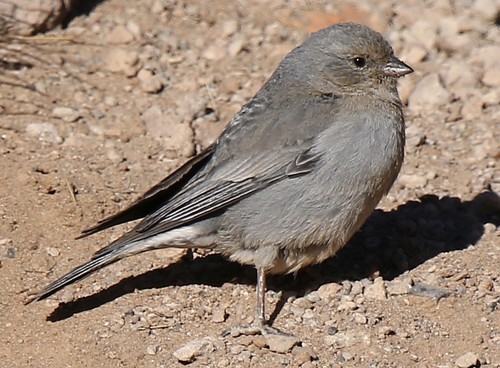
Plumbeous Sierra Finch
Geospizopsis unicolor
The slate-gray sentinel of the Andes, the Plumbeous Sierra Finch is a master of the high-altitude landscape. This resilient songbird is a frequent visitor to mountain gardens, bringing a sense of calm elegance to the rugged peaks.
Quick Identification
Size
Length: 14.5–16 cm (5.7–6.3 in); Weight: 21–28 g (0.7–1.0 oz)
Colors
Males are a uniform, leaden slate-gray with darker wings and tail; females and juveniles are grayish-brown with heavy dark streaking on the breast and back.
Key Features
- Uniformly slate-gray plumage in males
- Dark, conical bill with a slightly curved culmen
- Heavily streaked, sparrow-like appearance in females
- Ground-hopping foraging behavior
When You’ll See Them
Behavior
The Plumbeous Sierra Finch is a hardy and visible resident of the high Andes, often found in environments where other birds struggle to thrive. They are notably bold and relatively tame around humans, frequently seen hopping across stone walls, dusty roads, and garden paths in mountain villages. While they are usually seen in pairs or small family groups during the breeding season, they can form larger, loose flocks during the winter months as they move to slightly lower elevations in search of food.
Their movement is distinctive; they spend a great deal of time on the ground, moving with agile, rhythmic hops rather than walking. When disturbed, they typically fly a short distance to a rocky outcrop or a low shrub, twitching their tails upon landing. Their song is a simple, thin whistle, often delivered from a prominent boulder or a fence post that serves as a lookout over their high-altitude territory.
EverydayEarth exclusive
Camera Tips
To capture the best footage of the Plumbeous Sierra Finch, position your camera at a very low angle, no more than 6 to 10 inches off the ground. These birds are almost exclusively ground-foragers, and a low perspective will provide an intimate, eye-level view of their activity. Aim the camera toward a flat, rocky area or a patch of short grass near a garden edge. Using a wide-angle lens can help capture the dramatic Andean backdrop which adds a sense of place to your wildlife captures.
Since these birds are attracted to human activity, you can easily lure them into your camera’s field of view using 'ground-scattering.' Instead of a hanging feeder, sprinkle a mix of fine seeds, millet, or cracked corn directly onto a flat rock or a bare patch of soil. They are especially fond of areas that mimic their natural rocky habitat, so placing your bait near a stone wall or a gravel path will make them feel secure enough to linger in front of the lens.
Lighting is a critical factor in the high altitudes where these birds live. The mountain sun can be incredibly harsh, which can wash out the subtle gray tones of the male's plumage. Try to set your camera to record during the 'golden hours' of early morning or late afternoon. If your camera allows for exposure adjustment, slightly underexpose the shot to preserve the detail in the bird's feathers against the often-bright mountain landscape.
In the arid puna or paramo regions, water is the ultimate attractant. A shallow stone basin or a simple drip system that creates a small puddle will bring in every Plumbeous Sierra Finch in the neighborhood. They are enthusiastic bathers, and capturing a video of their vigorous splashing is a highlight for any backyard observer. Ensure the water source is in a clear area so the birds can see predators approaching, which will encourage them to spend more time on camera.
Similar Species
Species that look similar or are commonly confused with Plumbeous Sierra Finch.
Ash-breasted Sierra Finch
The Ash-breasted has a clear white belly and vent, while the Plumbeous male is solid gray underneath.
Mourning Sierra Finch
Look for the bold black face mask and yellow bill on the Mourning Sierra Finch, which the Plumbeous lacks.
Band-tailed Sierra Finch
The Band-tailed has white outer tail feathers and a more yellowish bill compared to the uniform tail and dark bill of the Plumbeous.
Frequently Asked Questions
Record Plumbeous Sierra Finch at your habitat
Connect a camera to start building your own species record — AI identifies every visitor automatically.