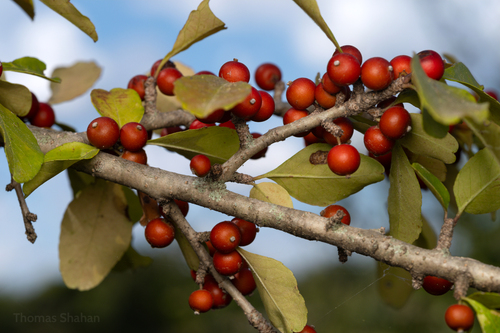
possumhaw
Ilex decidua
A winter masterpiece for the wildlife garden, Possumhaw drops its leaves to reveal a breathtaking bounty of red berries. It is the ultimate cold-weather bird magnet, offering a clear stage for your backyard camera to capture the drama of winter survival.
Quick Identification
Size
Typically grows 15-30 feet (4.5-9 meters) tall with a spread of 15-20 feet (4.5-6 meters).
Colors
Dull green foliage; light gray to brown bark; female plants produce vibrant orange-to-red berries.
Key Features
- Deciduous habit where leaves drop in fall to reveal bare, berry-laden branches
- Small, glossy red or orange drupes (berries) that persist through winter
- Dull green, wedge-shaped leaves with finely toothed margins
- Smooth, pale gray bark that often develops a 'warty' texture with age
When You’ll See Them
Behavior
In the backyard, Possumhaw acts as a social hub for birds. Because the berries are relatively low in fat and high in carbohydrates, they aren't the first choice for birds in the fall. Instead, they serve as a critical 'emergency food' that becomes more palatable after several freeze-thaw cycles. This means your Possumhaw will likely remain quiet through November, only to suddenly host dozens of Cedar Waxwings or American Robins in late January or February as other food sources vanish.
EverydayEarth exclusive
Camera Tips
Lighting is your biggest challenge in winter. Try to orient the camera facing North to keep the low winter sun at the camera's back. This prevents 'silhouetting' and ensures the bright red berries pop against the gray or blue sky, making it much easier for AI models to trigger on the color contrast. If your camera has a 'Time Lapse' feature, consider setting it to take one photo every hour during the spring to capture the subtle, rapid transition from tiny white flowers to green fruit.
Don't forget the ground! As the season progresses, many berries will fall to the base of the tree. Placing a secondary camera at a low angle near the trunk can capture ground-dwelling species like Hermit Thrushes, Fox Sparrows, and the namesake Opossums that come to scavenge the fallen fruit at night. For the best night shots, ensure your camera's IR (infrared) flash is set to 'Medium' to avoid overexposing the pale, reflective gray bark of the Possumhaw trunk.
Similar Species
Species that look similar or are commonly confused with possumhaw.
Frequently Asked Questions
Record possumhaw at your habitat
Connect a camera to start building your own species record — AI identifies every visitor automatically.