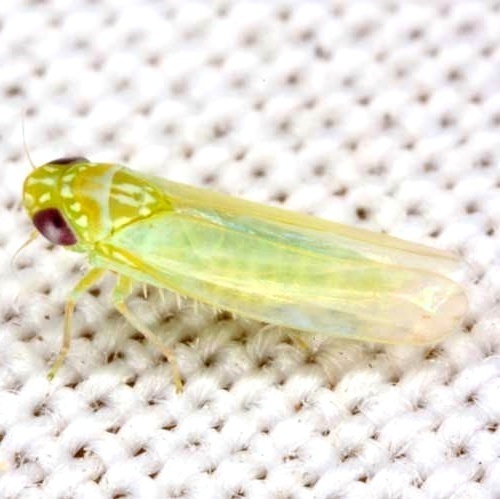
Potato Leafhopper
Empoasca fabae
A tiny neon-green traveler with a knack for sideways scuttling, the Potato Leafhopper is a master of the garden vanish-act. Despite its small size, its incredible migratory journey from the Gulf Coast makes it a fascinating summer visitor for any backyard observer.
Quick Identification
Size
Approximately 3 mm (1/8 inch) in length
Colors
Vivid lime green or yellowish-green with translucent wings; often features 6 to 8 small white spots on the head and thorax
Key Features
- Distinct wedge-shaped body that tapers toward the rear
- Vibrant neon-green coloration with translucent wings
- Six tiny white spots on the pronotum (the plate behind the head)
- Unique 'sideways' walking motion when disturbed
When You’ll See Them
Behavior
The Potato Leafhopper is a highly active and somewhat elusive insect known for its incredible agility. Unlike many other garden insects that crawl forward, these leafhoppers are famous for their lateral movement, scuttling sideways like a tiny crab when they sense a predator or a curious human. They are also powerful jumpers, using their hind legs to launch themselves into the air and transition into flight in a split second.
In North America, these insects are remarkable migrants. They do not overwinter in northern climates; instead, they hitch a ride on high-altitude wind currents (the Low-Level Jet) from the Gulf States to reach northern gardens and farms every spring. Once they arrive, they are solitary but social enough to congregate in large numbers on a single host plant, especially during warm, humid weather.
EverydayEarth exclusive
Camera Tips
Because Potato Leafhoppers are only 3mm long, capturing them requires a dedicated macro setup or a wildlife camera with a very close focal minimum. Position your camera lens within 3 to 6 inches of the undersides of leaves, particularly on 'sentinel' plants like snap beans or potatoes. These are their preferred hosts and provide the best chance for a consistent sighting. Use a small aperture (high f-stop) if possible to ensure their entire wedge-shaped body remains in focus.
Lighting is crucial for bringing out their neon-green color. Direct midday sun can cause harsh reflections on their translucent wings, so try to use a diffuser or aim for early morning light. If your camera setup allows for an external light source, a side-angled LED can help highlight the tiny white spots on their head, which are the key diagnostic features for AI identification. Since they are attracted to certain wavelengths, some enthusiasts find that placing a yellow sticky card just outside the camera's field of view can draw them into the area, though you want to capture them on the natural leaf for the best photos.
To trigger an AI-powered camera, you may need to set the sensitivity to high, as their small mass might not trip standard motion sensors. A better strategy is to use time-lapse mode during peak afternoon hours. Look for 'hopperburn'—a distinctive curling and yellowing of leaf edges—as this is a guaranteed sign that leafhoppers are currently feeding in that spot. Set your camera on those specific damaged leaves, as the insects are likely to return to finish their meal.
Similar Species
Species that look similar or are commonly confused with Potato Leafhopper.
Frequently Asked Questions
Record Potato Leafhopper at your habitat
Connect a camera to start building your own species record — AI identifies every visitor automatically.