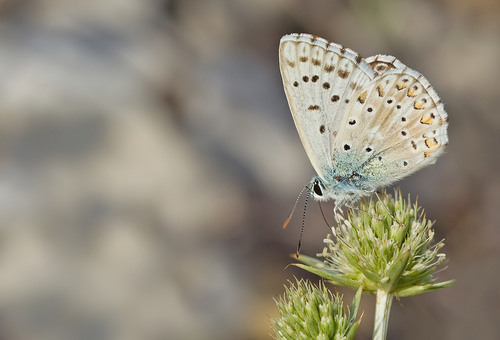
Provence chalk-hill blue
Polyommatus hispana
A shimmering herald of the Mediterranean spring, the Provence chalk-hill blue is a master of the limestone hills. With its silvery-blue wings and fascinating ant-assisted lifecycle, it is a prized find for any backyard observer.
Quick Identification
Size
Wingspan of 30–38 mm (1.2–1.5 inches)
Colors
Males are a pale, silvery sky-blue with thin dark borders; females are chocolate brown with orange spots (lunules) along the wing edges.
Key Features
- Checkered black-and-white wing fringes
- Pale silvery-blue upper wings in males
- Row of orange spots on the outer edge of female hindwings
- Small black spots ringed with white on a light grey-brown underside
When You’ll See Them
Behavior
The Provence chalk-hill blue is a sun-loving butterfly that is most frequently observed fluttering low over dry, calcareous grasslands. They are known for their frantic, low-level flight as they search for nectar or mates among the scrub. Unlike some more nomadic species, these butterflies tend to stay very close to their natal colonies, making them a reliable sight in the right habitat year after year.
A fascinating aspect of their behavior is their symbiotic relationship with ants. The larvae secrete a sugary fluid that attracts ants, which in turn protect the caterpillars from predators. As adults, they are social insects that may congregate in large numbers on favorite nectar sources or at 'puddling' sites where they drink mineral-rich water from damp earth.
EverydayEarth exclusive
Camera Tips
To capture high-quality images of the Provence chalk-hill blue, position your camera low to the ground, approximately 12 to 24 inches high. This species spends the majority of its time near the height of the wildflowers it feeds on. Direct the lens toward a cluster of nectar-rich plants like Lavender or Wild Thyme, which act as natural stages for the butterfly to land and bask.
Lighting is your best friend with this species. The iridescent blue of the males is most striking in direct, bright sunlight, but to avoid harsh shadows, try to capture them during the 'golden hours' of late morning or mid-afternoon. If your camera allows for macro settings or has a close-focusing distance, ensure it is set to trigger on small movements, as these butterflies are light and fast.
Because they are small, a traditional trail camera might struggle to trigger. Using a dedicated backyard AI camera with a shorter focal range is ideal. If you are struggling to get them to stay still, consider creating a 'puddling' station nearby—a patch of damp, slightly salty sand. Butterflies will often linger there for minutes at a time to extract minerals, providing the perfect opportunity for a clear, still shot.
Seasonality is critical for this specific blue. Unlike its very similar cousins, the Provence chalk-hill blue has two distinct flight periods (spring and late summer). Ensure your cameras are deployed and batteries are fresh during the peak of May and August to catch the emergence of the new broods.
Similar Species
Species that look similar or are commonly confused with Provence chalk-hill blue.
Frequently Asked Questions
Record Provence chalk-hill blue at your habitat
Connect a camera to start building your own species record — AI identifies every visitor automatically.