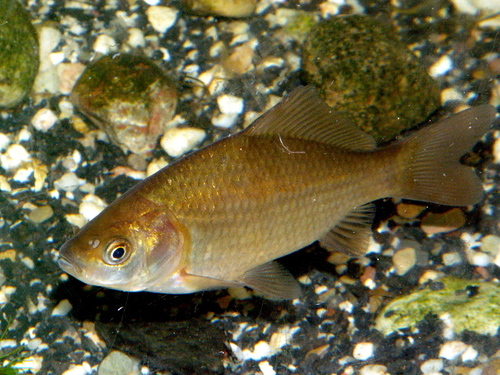
Prussian Carp
Carassius gibelio
Meet the silver survivor of the waterway. The Prussian Carp is a master of adaptation, famous for its shimmering scales and its unique ability to thrive in almost any freshwater environment.
Quick Identification
Size
Typically 15-45 cm (6-18 in) in length and weighing up to 3 kg (6.6 lbs).
Colors
Predominantly silver or silvery-grey with a darker olive-grey or brownish back; underbelly is usually white or pale cream.
Key Features
- Deeply forked tail fin
- Lack of barbels (whiskers) around the mouth
- High, slightly concave dorsal fin
- Large, distinct silver scales along the lateral line
When You’ll See Them
Behavior
The Prussian Carp is a remarkably hardy and adaptable species, often flourishing in environments that would be hostile to other fish. They are known for their incredible tolerance to low oxygen levels and can even survive in stagnant or polluted waters. Socially, they are gregarious and are frequently seen moving in small to medium-sized shoals, especially when foraging along the muddy bottoms of ponds or slow-moving rivers.
One of their most fascinating traits is their ability to reproduce through gynogenesis. In many populations, the fish are almost entirely female and use the sperm of other related carp species to trigger the development of their eggs, resulting in offspring that are clones of the mother. While they are generally shy around humans, they can become quite bold in garden pond settings, eventually associating human presence with the arrival of food.
EverydayEarth exclusive
Camera Tips
Capturing the Prussian Carp on camera requires a specialized approach since they are sub-aquatic. For the best results, use a waterproof action camera or a dedicated underwater trail camera. Position the camera in the 'marginal zone'—the shallow area near the edge of a pond where the water is between 6 and 18 inches deep. This is where Prussian Carp frequently venture to feed on insects and plant matter. Angle the lens slightly upward toward the surface to catch the silver glimmer of their scales as they catch the sunlight.
To keep the fish in the frame, use a scent-based lure rather than just visual bait. A small mesh bag filled with crushed bread or sweetcorn tied to a weighted stake is highly effective. Place this approximately 2 feet in front of the lens. Because these fish are easily spooked by sudden shadows, ensure your camera is securely mounted and does not bob or sway with the water current. Using a 'pre-trigger' or high-frame-rate setting is helpful, as their movements can be deceptively fast when they are startled.
Early morning is the gold standard for lighting. The low angle of the sun penetrates the water more softly, reducing the harsh glare on the fish's reflective silver body. During the spring spawning season (May and June), you can often move your camera to the very edge of the water among the reeds; the fish become much more active and less cautious, frequently splashing in the shallows where they are easier to film.
Similar Species
Species that look similar or are commonly confused with Prussian Carp.
Frequently Asked Questions
Record Prussian Carp at your habitat
Connect a camera to start building your own species record — AI identifies every visitor automatically.