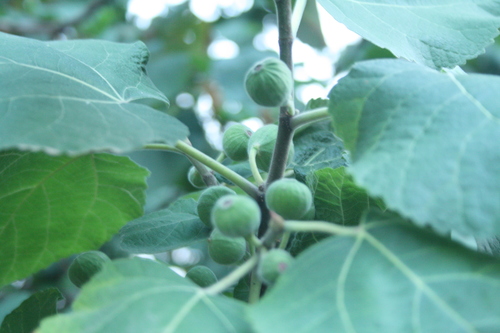
Punjab fig
Ficus palmata
A resilient survivor and a feast for the neighborhood, the Punjab fig turns any backyard into a bustling wildlife buffet. Its sweet, dark fruits are a magnet for everything from colorful songbirds to elusive nocturnal mammals.
Quick Identification
Size
Height: 2-10 meters (6.5-33 feet); Leaf length: 12-15 cm (4.7-6 inches)
Colors
Dull green foliage with rough textures; bark is grey-brown; fruit transitions from light green to deep purple-black when ripe.
Key Features
- Heart-shaped or 3-5 lobed leaves with serrated margins
- Small, axillary figs that turn dark purple when ripe
- Smooth grey bark that becomes slightly fissured with age
- Milky sap (latex) visible when stems or leaves are broken
When You’ll See Them
Behavior
The Punjab fig, commonly known as Bedu, is a resilient deciduous shrub or small tree that plays a vital role in its ecosystem. Unlike many ornamental figs, it is exceptionally hardy and can thrive in rocky, dry environments. It serves as a keystone species in many backyard habitats because it produces fruit that serves as a critical food source for a wide variety of birds, mammals, and insects. While it grows relatively slowly, its wide-spreading canopy provides excellent nesting sites and cover for smaller wildlife.
In a backyard setting, the Punjab fig is a hub of social activity. During the fruiting season, you can observe a strict 'pecking order' as different bird species compete for the ripest figs. Because it is highly adaptable, it often bridges the gap between wild forest edges and suburban gardens, making it an ideal anchor plant for those looking to observe diverse wildlife through their AI-powered cameras. Humans have traditionally used the fruit for jams and traditional medicines, highlighting its long-standing interaction with local communities.
EverydayEarth exclusive
Camera Tips
Capturing the life around a Punjab fig requires strategic placement. Since most of the 'action' happens when the figs ripen, you should mount your camera approximately 5 to 7 feet high, angled slightly downward toward a cluster of ripening fruit. This height is the 'sweet spot' for capturing both perching songbirds and climbing mammals like squirrels or monkeys. If your camera has a macro or close-focus setting, use it; fig-eating birds move quickly, and a sharp focus on the fruit cluster ensures you catch the exact moment of the strike.
Lighting is your biggest challenge with this species. The broad, serrated leaves can create heavy shadows or cause 'lens flare' if the sun hits the waxy surface at the wrong angle. Position your camera facing North or South to avoid direct East-West sun exposure. If you are targeting nocturnal visitors like fruit bats or civets, ensure your IR (infrared) flash is set to a medium intensity—the light-colored bark of the Punjab fig can sometimes cause overexposure in night shots, washing out the detail of the animal.
For the best results, use 'Hybrid Mode' (photo plus video) during the peak fruiting months of June and July. Set the trigger interval to the shortest possible time, as the Punjab fig often attracts multiple visitors in quick succession. If you notice a particular branch is being used as a 'launching pad' by birds before they hop to the fruit, move your camera to frame that branch. This usually results in cleaner, more 'posed' shots of the species before they begin the messy process of eating.
Similar Species
Species that look similar or are commonly confused with Punjab fig.
Frequently Asked Questions
Record Punjab fig at your habitat
Connect a camera to start building your own species record — AI identifies every visitor automatically.