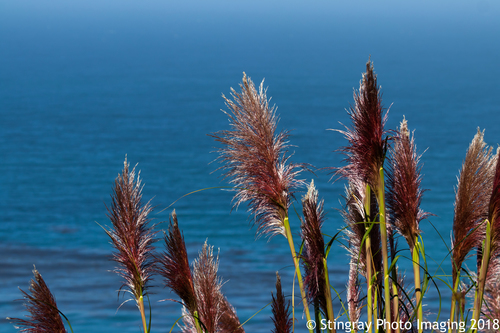
Purple Pampas Grass
Cortaderia jubata
A towering giant of the grass world, Purple Pampas Grass commands attention with its massive, violet-tinted plumes that can reach over 20 feet into the air. Though beautiful to look at, this Andean native is a master of survival and a prolific spreader in coastal and suburban environments.
Quick Identification
Size
Foliage reaches 1.5–2 meters (5–6.5 feet); flower stalks can reach up to 7 meters (23 feet) in height.
Colors
Bright green leaves with a prominent midrib; immature flower plumes are distinctively purple or pinkish-violet, fading to tan or silver-white as they age.
Key Features
- Towering purple or pinkish-hued flower plumes
- Razor-sharp, serrated leaf edges that can cut skin
- Large, fountain-like clump of coarse green foliage
- Flower stalks significantly taller than the base foliage
When You’ll See Them
Behavior
Purple Pampas Grass is an exceptionally hardy and aggressive perennial grass. Unlike many other species, it is apomictic, meaning it can produce viable seeds without fertilization. This allows a single plant to colonize an entire hillside, as each plume can release tens of thousands of wind-borne seeds that travel for miles. It is often seen as a colonizer of disturbed soils, such as road cuts, burnt areas, or cleared suburban lots.
In the home landscape, it is often considered an invasive weed rather than an ornamental. Its growth is rapid, and its root system is dense, making it difficult to remove once established. While it doesn't 'move' like an animal, its interaction with the environment is dynamic; it creates significant fire hazards due to the buildup of dry, dead material at the base and provides dense cover for small rodents and reptiles.
EverydayEarth exclusive
Camera Tips
Capturing Purple Pampas Grass on camera requires a focus on movement and lighting rather than stealth. Because these plants can grow up to 23 feet tall, position your camera at a low angle looking upward toward the sky. This 'worm's eye view' emphasizes the plant's imposing height and allows the purple plumes to be backlit by the sun. Setting your camera to a higher frame rate or a 'Sports' mode is helpful for capturing the graceful, rapid swaying of the plumes in the wind without motion blur.
Time-lapse photography is the most rewarding way to document this species. Set your camera to take a photo every 30 minutes over the course of several weeks in late summer to watch the plumes emerge from their sheaths and transition from a deep violet to a feathery tan. If you are using a motion-activated camera, be aware that the swaying leaves and plumes will frequently trigger the sensor on windy days. To avoid filling your SD card with 'wind shots,' lower the sensitivity of your PIR sensor or aim the camera at the base of the plant where movement is more stable.
While the plant itself is the subject, it also serves as a hub for wildlife. Small birds like finches and sparrows often perch on the sturdy stalks or scavenge the base for nesting material. Position a secondary camera near the base of the clump at a height of about 12 inches to catch glimpses of rabbits, lizards, or rodents that use the sharp, dense foliage as a fortress against predators. No bait is needed, as the structure of the plant is the primary draw for these animals.
For the best color accuracy, avoid filming in the harsh midday sun, which can wash out the delicate purple hues. The 'golden hour'—the hour after sunrise or before sunset—will make the plumes appear to glow. If your camera has manual settings, slightly underexposing the shot can help preserve the rich pink and purple tones in the flower heads.
Similar Species
Species that look similar or are commonly confused with Purple Pampas Grass.
Frequently Asked Questions
Record Purple Pampas Grass at your habitat
Connect a camera to start building your own species record — AI identifies every visitor automatically.