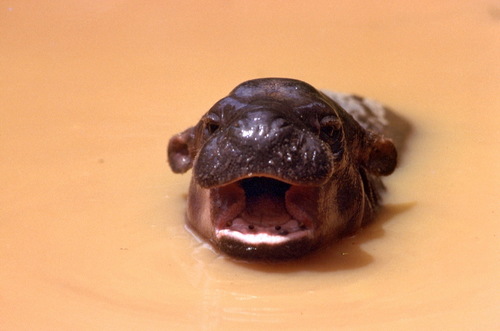
Pygmy Hippopotamus
Choeropsis liberiensis
The Pygmy Hippo is a rare, reclusive gem of the West African rainforest. Smaller and more solitary than its famous cousin, this 'forest ghost' moves silently through the shadows of the swamp.
Quick Identification
Size
Length: 150–175 cm (4.9–5.7 ft); Height: 75–100 cm (2.5–3.3 ft); Weight: 180–275 kg (400–600 lbs)
Colors
Slate gray to greenish-black skin with a smooth, glossy texture; underbelly is a lighter creamy gray or pale pink.
Key Features
- Compact, barrel-shaped body with relatively long legs
- Eyes and nostrils on the side of the head rather than the top
- Rounded ears and a small, flat tail
- Glossy, hairless skin that secretes a clear 'blood sweat' for moisture
When You’ll See Them
Behavior
Unlike their larger, highly social cousins, Pygmy Hippopotamuses are solitary and reclusive creatures of the deep forest. They are primarily nocturnal, spending the daylight hours tucked away in riverbanks, burrows, or dense vegetation. They are much less aquatic than the Common Hippo, though they still rely on water to keep their skin moist and body temperature regulated. When they move through the forest, they follow well-beaten paths and 'tunnels' through the undergrowth, which they mark by vigorously wagging their tails while defecating to spread scent.
These animals are rarely seen by humans due to their shy nature and preference for thick cover. They are not known to be aggressive unless cornered or protecting a calf. While they lead mostly independent lives, their home ranges occasionally overlap, and they may tolerate the presence of another hippo in passing. Most of their active hours are spent foraging near water sources or deep within the humid forest floor.
EverydayEarth exclusive
Camera Tips
To capture a Pygmy Hippo on camera, placement is everything. These animals are creatures of habit and will use the same 'game trails' or tunnels through dense vegetation for years. Look for paths that appear cleared of low-lying leaves at about knee height near muddy riverbanks. Position your camera low—about 18 to 24 inches off the ground—and angle it slightly upward to capture their full profile as they pass through these narrow corridors.
Since they are almost exclusively active after dark, high-quality infrared (IR) or 'no-glow' flash is essential. Standard white flashes will likely spook this incredibly timid species, causing them to abandon the trail. Ensure your camera has a fast trigger speed (0.5 seconds or less) because, despite their stocky appearance, they move surprisingly quickly through the brush when they are on a mission to find food.
If you have a muddy wallow or a slow-moving stream on your property within their range, this is a prime spot. They often revisit the same 'cool down' spots to hydrate their skin. You can sometimes encourage a visit by ensuring native fruit-bearing trees are protected, as the scent of fallen fruit is a natural draw. Avoid using artificial baits, as these can disrupt their sensitive digestive systems and natural foraging patterns.
Check your camera's weather sealing frequently. The humid, swampy environments favored by Pygmy Hippos are notoriously hard on electronics. Using a desiccant pack inside the camera housing and ensuring the lens is treated with an anti-fog coating will prevent your midnight captures from looking like a blurry gray smudge. For the best results, set your camera to take 'burst' photos or short 10-second videos to observe their unique, cautious gait.
Similar Species
Species that look similar or are commonly confused with Pygmy Hippopotamus.
Frequently Asked Questions
Record Pygmy Hippopotamus at your habitat
Connect a camera to start building your own species record — AI identifies every visitor automatically.