Red Drum
Sciaenops ocellatus
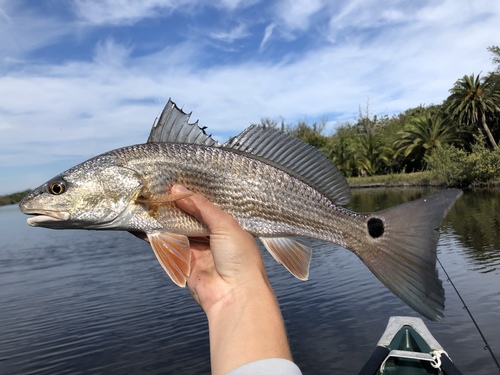
The legendary 'Golden Ghost' of the coast, the Red Drum is easily recognized by its shimmering copper scales and the mysterious eye-spot on its tail. Whether tailing in the shallows or booming in the deep, they are a crown jewel of backyard salt marshes.
Quick Identification
Size
20–60 inches (51–152 cm) in length; typically weighs 6–60 lbs (2.7–27 kg), though record specimens exceed 90 lbs.
Colors
Iridescent copper-bronze to reddish-gold upper body with a bright white belly; features one or more distinct black ocellated spots near the base of the tail.
Key Features
- Distinctive black 'eye spot' near the tail base
- Copper or bronze-hued scales with a metallic sheen
- Downward-pointing mouth with no chin barbels
- Blunt snout and a streamlined, powerful body profile
When You’ll See Them
Behavior
One of their most iconic behaviors is 'tailing.' In shallow water, Red Drum tip their heads down to forage for crabs and shrimp in the mud, causing their spotted tails to poke out above the water's surface. This makes them a favorite target for coastal observers and photographers. While generally wary of loud noises and vibrations, they are inquisitive predators that will patrol the same oyster bars or dock pilings daily if the food source is consistent.
EverydayEarth exclusive
Camera Tips
Capturing high-quality footage of Red Drum requires a specialized approach since they reside below the surface. For those with waterfront backyards or docks, a submerged 'drop camera' or a permanent underwater housing is the best method. Mount your camera on a pier piling or a weighted tripod about 1 to 2 feet off the sandy bottom, facing an area with natural structure like an oyster reef or seagrass edge. Red Drum are attracted to current, so angle the lens toward the incoming tide to catch them as they swim 'up-current' looking for food.
Because water clarity is the biggest challenge, timing is critical. Use your camera during 'slack tide' when the water movement slows down, allowing sediment to settle for the clearest shots. If you are using a camera with motion activation, be aware that floating debris can trigger it; setting the sensitivity to 'large subjects' or using a timed-lapse mode during the hour before sunset is often more effective. To draw them into the frame, you can use a perforated PVC pipe filled with crushed crab or shrimp as a 'scent lure' placed just out of the camera's view.
For those using trail cameras overlooking the water, look for 'tailing' action in shallow marshes during low tide. Position your camera on a low-profile tripod at the edge of a grass flat, angled slightly downward toward the water's surface. The high contrast of the black tail spot against the shimmering water makes for a stunning shoreline capture. In all cases, ensure your camera housing is treated with anti-fog solution, as the temperature difference between the water and the air can quickly cloud your lens during the golden hour.
Similar Species
Species that look similar or are commonly confused with Red Drum.
Frequently Asked Questions
Record Red Drum at your habitat
Connect a camera to start building your own species record — AI identifies every visitor automatically.