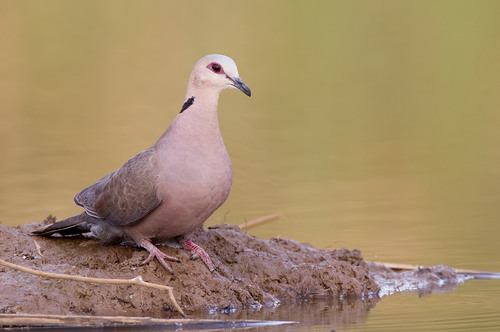
Red-eyed Dove
Streptopelia semitorquata
With its soothing, rhythmic call and striking crimson eyes, the Red-eyed Dove is a regal fixture of the African backyard. Discover how to spot this soulful visitor and capture its subtle beauty on camera.
Quick Identification
Size
Length: 30-34 cm (12-13.4 inches); Wingspan: 48-55 cm (19-22 inches); Weight: 180-350g (6.3-12.3 oz)
Colors
Overall brownish-grey with a soft pinkish-grey wash on the breast and underparts. The head is pale grey, and a distinct black half-collar with white edges wraps around the back of the neck. Deep red irises and a bare patch of red skin around the eyes are its most striking features.
Key Features
- Prominent black half-collar on the back of the neck
- Deep red eye color surrounded by a narrow ring of bare red skin
- Pale lavender-grey head and pinkish-mauve breast
- Large, stocky dove silhouette with a square tail
When You’ll See Them
Behavior
The Red-eyed Dove is a ubiquitous and confident resident of gardens and woodlands throughout Sub-Saharan Africa. Known for its rhythmic, six-note call that sounds like 'I am a red-eyed dove,' this bird is often one of the first sounds heard at dawn. While they are frequent visitors to bird feeders, they are somewhat more cautious than their smaller cousins, the Laughing Doves, often perching in the safety of a tree before descending to feed.
In social settings, they are generally solitary or found in pairs, though large congregations may form around reliable water sources or rich feeding grounds like grain fields. They are highly territorial during breeding season, and you may see males performing their signature display flight—a steep ascent followed by a graceful, circular glide back down to a perch.
EverydayEarth exclusive
Camera Tips
Capturing the perfect shot of a Red-eyed Dove requires a ground-level approach. Because these doves are primarily ground-feeders, placing your camera just 10-15 centimeters (4-6 inches) off the ground on a stable mounting stake will provide an intimate, eye-level perspective that makes the bird's namesake red eye pop in the footage. Focus your lens on a flat, clear patch of earth near shrubs or under a bird feeder where they feel secure enough to land and linger.
Water is the ultimate lure for this species. Unlike many other birds that take quick sips, Red-eyed Doves spend significant time at the water’s edge, drinking deeply through suction. Position your AI camera facing a shallow birdbath or a natural puddle after rain. For the best results, use a 'Fast Trigger' setting or 'Photo + Video' mode; these birds can be startled easily, and you want to catch the moment they land before they potentially fly off. High-resolution (4K) settings are highly recommended to capture the subtle texture of their plumage and the distinct red orbital ring.
If you are looking to attract them specifically for your camera, scatter a mix of large seeds like sunflower hearts, cracked corn, or sorghum in a consistent spot. They are creatures of habit and will return to the same feeding site daily if it remains undisturbed. Early morning light is your best friend—aim your camera to face north or south to avoid direct lens flare during the golden hours when these doves are most active. In the heat of the afternoon, they often retreat to the shade, so your camera might see more action if it's pointed toward a cool, shaded dusting bowl where they bathe in the soil to maintain their feathers.
Similar Species
Species that look similar or are commonly confused with Red-eyed Dove.
Frequently Asked Questions
Record Red-eyed Dove at your habitat
Connect a camera to start building your own species record — AI identifies every visitor automatically.