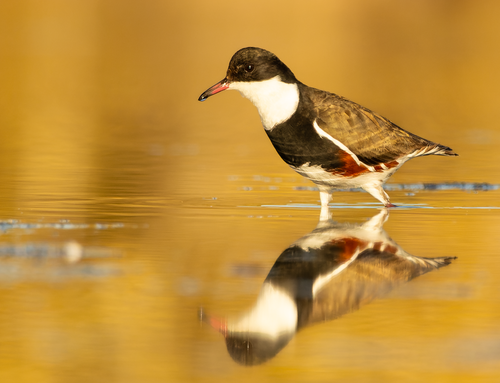
Red-kneed Dotterel
Erythrogonys cinctus
Meet the dapper nomad of the Australian wetlands. With its striking black breastplate and namesake red joints, the Red-kneed Dotterel is a master of the muddy shoreline.
Quick Identification
Size
Length: 17–20 cm (6.7–7.9 in); Wingspan: 33–38 cm (13–15 in); Weight: 40–65 g (1.4–2.3 oz)
Colors
Distinctive black 'cap' and broad black breast-band; white throat and belly; bronze-brown back and wings; bright pinkish-red upper legs (knees).
Key Features
- Broad black chest band against a stark white throat
- Prominent red coloring on the upper leg joints
- Solid black cap extending below the eye
- White trailing edge on the wings visible during flight
When You’ll See Them
Behavior
The Red-kneed Dotterel is a charismatic and energetic wader, often seen darting across mudflats with a rhythmic, bobbing gait. Unlike many shorebirds that are strictly coastal, this species is a specialist of inland freshwater systems, frequently appearing at the edges of suburban lakes, farm dams, and temporary floodwaters. They are highly nomadic, traveling vast distances across Australia to find receding water levels where prey is most concentrated.
Social by nature, these birds are often gregarious, forming small flocks and readily associating with other waders like the Black-fronted Dotterel. They are not particularly shy but will maintain a tactical distance from humans, preferring to run quickly away rather than take flight. When they do fly, they stay low to the water, showing off their distinctive white wing bars. Interestingly, they are known to swim well, occasionally crossing deep channels to reach better foraging grounds.
EverydayEarth exclusive
Camera Tips
To capture the best footage of a Red-kneed Dotterel, you must master the 'shoreline transition zone.' These birds spend almost their entire lives within two meters of the water's edge. Position your camera on a ground spike or low-profile mount just 10–15 centimeters (4–6 inches) above the mud. This low angle is crucial—it places the lens at the bird's eye level, making for much more intimate and professional-looking captures while ensuring the distinctive red 'knees' are clearly visible in the frame.
Because Dotterels are small and fast, standard PIR sensors can sometimes miss them or trigger too late. Set your camera to its most sensitive motion setting and use 'Burst Mode' to capture 3–5 photos per trigger. If you are using a video-capable trail camera, keep the clips short (10–15 seconds) to save battery, as the movement of water or wind-blown reeds can cause frequent triggers. Aim your camera toward the north or south to avoid direct sun glare reflecting off the water, which can wash out the bird’s intricate feather patterns.
While you cannot lure these birds with traditional feeders, you can attract them by maintaining a 'soft edge' on a backyard pond. A sloping area of wet mud or very shallow water (less than 2cm deep) is an irresistible magnet for them. If your camera is near a public path or high-traffic area, try to camouflage the casing with local mud or dried reeds. Red-kneed Dotterels are observant; if they see a large, blocky object that wasn't there yesterday, they may forage just out of range until they grow accustomed to it.
Similar Species
Species that look similar or are commonly confused with Red-kneed Dotterel.
Frequently Asked Questions
Record Red-kneed Dotterel at your habitat
Connect a camera to start building your own species record — AI identifies every visitor automatically.