Red Porgy
Pagrus pagrus
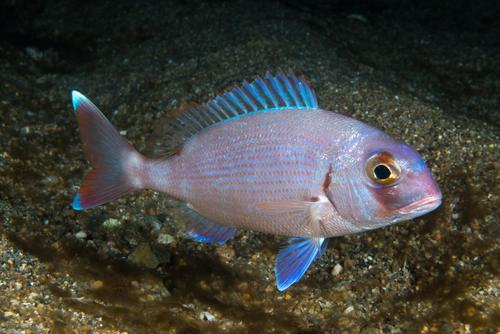
With its shimmering rose-colored scales and inquisitive personality, the Red Porgy is a jewel of the Atlantic reefs. This fascinating hermaphroditic fish is a favorite for underwater observers due to its bold behavior and striking iridescent blue markings.
Quick Identification
Size
Typically 35-50 cm (14-20 inches) in length, though can reach 91 cm (36 inches); weights usually range from 1-3 kg (2-7 lbs).
Colors
Distinctive rose-pink to silvery-red body with small, iridescent blue spots scattered along the upper sides; fins are generally pink or yellowish.
Key Features
- Deep, oval-shaped body with a steep head profile
- Tiny blue iridescent spots along the back and sides
- Two rows of molar-like teeth for crushing shells
- Deeply forked tail with white-tipped lobes
When You’ll See Them
Behavior
The Red Porgy is a social, bottom-dwelling species often found congregating near rocky reefs, ledges, and continental shelf habitats. They are known for their inquisitive nature, often approaching divers or underwater camera rigs to investigate disturbances in the sand. As protogynous hermaphrodites, most individuals begin their lives as females and transition to males as they grow larger and older, a strategy that ensures the survival of the colony by maintaining a balance of breeding adults.
These fish are relatively slow-moving but capable of quick bursts when hunting or avoiding predators like sharks and larger groupers. While they are not a 'backyard' species in the traditional sense, they are a frequent sight for coastal residents using underwater 'drop cams' or pier-mounted cameras. They interact peacefully with other reef species but are highly competitive when food sources like crustaceans are uncovered from the seabed.
EverydayEarth exclusive
Camera Tips
To capture the Red Porgy on an AI-powered underwater camera, location is everything. Look for 'hard bottom' areas where rocky outcroppings meet sandy patches. This transition zone is where Red Porgy love to forage for buried invertebrates. If you are deploying a drop-camera from a pier or boat, use a weighted tripod mount to ensure the camera remains steady against bottom currents. Aim the lens horizontally along the seabed rather than straight down to capture the fish’s distinctive profile and the blue spots that shimmer in the light.
Baiting is highly effective for this species. Using a mesh 'chum bag' filled with crushed squid or oily fish like mackerel will draw them in quickly. Red Porgy are particularly attracted to the scent of crushed shellfish. Position the bait approximately 3 to 5 feet in front of the lens to allow the AI to trigger on the full body of the fish as it approaches. Since they are diurnal, you will get the best color representation during midday when sunlight penetrates the deepest, bringing out the vibrant pinks and reds of their scales.
For camera settings, use a high frame rate (at least 60fps) if your camera allows. The water can often be murky near the bottom, and the fast movement of a fish darting toward bait can result in motion blur. If your AI camera has a 'pet' or 'wildlife' mode, it will typically handle the Red Porgy well, but ensure your underwater housing is scrubbed clean of algae to prevent the autofocus from locking onto the glass instead of the fish. During the spring spawning season, you may even capture larger groups of males displaying brighter colors than usual.
Similar Species
Species that look similar or are commonly confused with Red Porgy.
Frequently Asked Questions
Record Red Porgy at your habitat
Connect a camera to start building your own species record — AI identifies every visitor automatically.