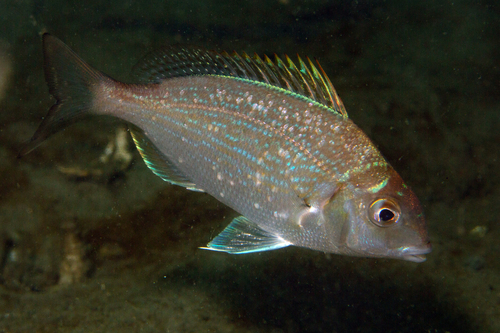
Scup
Stenotomus chrysops
The Scup is the shimmering silver dollar of the Atlantic coast, known for its spirited personality and beautiful iridescent scales. Whether they are schooling around a pier or foraging in the seagrass, these hardy fish are a delight for coastal wildlife watchers.
Quick Identification
Size
Typically 10-14 inches (25-35 cm) long and weighing 1-2 lbs (0.45-0.9 kg), though trophy specimens can reach 18 inches.
Colors
Dull silvery-grey with iridescent highlights of blue and purple; belly is off-white to silver. Young scup often display faint dark vertical bars.
Key Features
- Deep, pancake-flat body shape
- Small mouth with strong, grinding teeth
- Long dorsal fin with prominent sharp spines
- Deeply forked tail and large eyes
When You’ll See Them
Behavior
Scup, often called porgy by coastal residents, are highly gregarious schooling fish that move in massive groups. They are seasonal migrators, heading into shallow inshore waters during the spring and summer to spawn and feed, before retreating to deeper, warmer offshore waters as the ocean temperature drops in the fall. In a backyard coastal setting, you’ll see them darting around submerged structures like pier pilings or rocky outcrops.
These fish are relatively bold and curious, which makes them excellent subjects for underwater observation. While they are a staple food source for larger predators like striped bass and bluefish, they are tenacious feeders themselves. They use their specialized teeth to crush the shells of invertebrates, often seen hovering just above the seabed and 'pecking' at the substrate to stir up hidden prey.
EverydayEarth exclusive
Camera Tips
Capturing Scup on camera requires an underwater setup, such as an action camera in a waterproof housing or a specialized underwater trail camera. If you have a dock or live near a bulkhead, mount your camera to a weighted PVC rig or a 'crab pot' style frame. Position the lens about 12-18 inches off the bottom, facing a sandy patch adjacent to a rocky edge. This transition zone is where Scup frequently forage for worms and crustaceans.
To guarantee activity in front of the lens, use a mesh bait bag filled with crushed clams or oily fish like mackerel. Secure the bag about 3 feet away from the camera. The scent will draw in a school within minutes. Because Scup are silver and highly reflective, avoid using high-intensity artificial lights at night, which will result in 'blown-out' white flashes. Instead, rely on natural sunlight during midday when the water is clearest and the sun is overhead to illuminate their iridescent scales.
Setting your camera to a high frame rate (60fps or higher) is recommended. Scup are fast, twitchy swimmers, and a standard 30fps video might appear blurry when they dart to grab a piece of bait. If your camera has a 'time-lapse' mode, set it to trigger every 5-10 seconds to catch the movement of the school without filling up your memory card too quickly with empty water footage. Keep an eye on the tides—the hour before and after high tide usually offers the best visibility and the most active fish movement.
Similar Species
Species that look similar or are commonly confused with Scup.
Frequently Asked Questions
Record Scup at your habitat
Connect a camera to start building your own species record — AI identifies every visitor automatically.