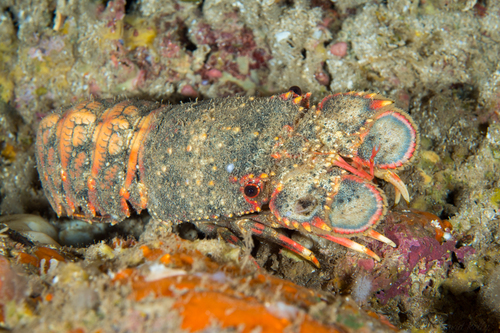
Regal Slipper Lobster
Arctides regalis
Meet the 'ula-papapa'—a master of disguise cloaked in royal purple and orange. This secretive crustacean swaps traditional claws for shovel-like plates, ruling the night-time reefs with quiet grace.
Quick Identification
Size
Typically 10–15 cm (4–6 inches) in length; weight ranges from 200–400g (7–14 oz)
Colors
Mottled patterns of royal purple, bright orange, reddish-brown, and tan; no significant color difference between sexes
Key Features
- Flattened, spade-like antennae instead of long whips
- Broad, shovel-shaped carapace with no large front claws
- Intricate marbling of purple and orange pigments
- Stout, heavily armored body designed for clinging to rocks
When You’ll See Them
Behavior
While solitary by nature, they are not aggressively territorial and can occasionally be found sharing a large crevice with other nocturnal species. Their movement is slow and deliberate, which makes them excellent subjects for observation if you can manage to find one. Unlike many marine animals that dart away from light, the Regal Slipper Lobster often remains still, relying on its incredible camouflage to blend in with the surrounding coral and coralline algae.
EverydayEarth exclusive
Camera Tips
Bait is the most effective way to draw a Regal Slipper Lobster into your camera’s field of view. Use a perforated bait container—a short length of PVC pipe with holes drilled into it works perfectly—and fill it with crushed local shellfish, shrimp, or oily fish like mackerel. Secure this bait station approximately 2-3 feet in front of the lens. The scent will travel through the water and lure the lobster out of its crevice. Because they are sensitive to bright white lights, which may cause them to retreat, ensure your camera uses high-intensity infrared (IR) or 'no-glow' LEDs for night recording.
Since the Regal Slipper Lobster is a slow mover, you don't need a high frame rate; instead, prioritize high resolution (4K) to capture the stunning purple and orange marbling that makes this species so unique. If you are mounting the camera on a pier or dock piling, be mindful of the tides; ensure the camera remains submerged even at low tide. Finally, biofouling is a major hurdle in tropical waters. Algae and small barnacles can cover your lens in just a few days, so plan to retrieve and clean the camera housing every 48 to 72 hours to ensure clear footage.
Similar Species
Species that look similar or are commonly confused with Regal Slipper Lobster.
Frequently Asked Questions
Record Regal Slipper Lobster at your habitat
Connect a camera to start building your own species record — AI identifies every visitor automatically.