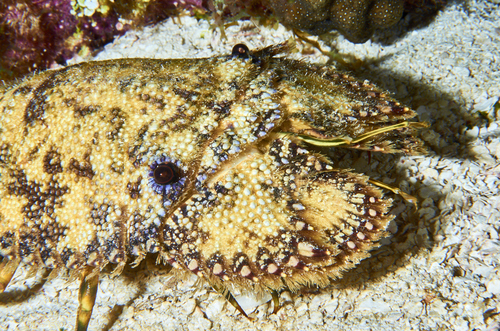
Sculptured Slipper Lobster
Parribacus antarcticus
Meet the ocean's most elusive 'living rock.' With its flattened body and armor-plated shell, the Sculptured Slipper Lobster is a fascinating master of reef camouflage.
Quick Identification
Size
Typically 15-20 cm (6-8 inches) in length; weight varies by age but usually under 1 lb
Colors
Mottled patterns of tan, grey, and reddish-brown with small purple or dark spots; underside is usually a pale cream color
Key Features
- Flattened, plate-like antennae used for digging
- Highly textured 'sculptured' carapace resembling rock
- Lacks large front claws found in Maine lobsters
- Broad, shovel-like body shape
When You’ll See Them
Behavior
The Sculptured Slipper Lobster is a master of camouflage and a creature of the night. Unlike their more aggressive clawed cousins, these lobsters are docile and rely almost entirely on their flattened profile and 'sculpted' shell to blend into rocky crevices and coral reef ceilings during the day. They are often found clinging upside down in caves, where their mottled coloration makes them virtually invisible to predators like sharks and octopuses.
When darkness falls, they become active hunters. They move across the sandy or rocky seafloor with surprising agility. While generally solitary, they are not strictly territorial and may occasionally be found sharing a prime hiding spot with other slipper lobsters. If threatened, they use their powerful tails to 'flip' backward rapidly, though they lack the defensive pinch of other lobster species.
EverydayEarth exclusive
Camera Tips
Capturing the Sculptured Slipper Lobster requires a specialized underwater setup, as they are strictly marine animals. If you have a 'backyard' that borders a tropical reef or a rocky shoreline, place your waterproof camera near the base of coral heads or at the entrance of small, dark crevices. Because they are shy, use a camera with a wide-angle lens to capture their broad, flat profile as they emerge from their hiding spots at night.
Lighting is the most critical factor. Slipper lobsters are sensitive to bright white light, which may cause them to retreat. Use an underwater camera equipped with red LEDs or a low-intensity warm light to observe their natural foraging behavior. Positioning the camera at a low angle, looking slightly upward toward a reef ledge, often provides the best 'hero shot' of their unique shovel-shaped antennae.
To increase your chances of a sighting, consider placing a 'scent lure' near the camera. A small mesh bag containing a crushed clam or piece of fish securely weighted to the bottom will often draw them out of their caves. Since they move slowly while foraging, set your camera to record longer video clips (30-60 seconds) rather than high-speed bursts.
Seasonal timing is less important than tidal cycles. These lobsters are often most active during high tides at night when they feel safer moving into shallower areas to feed. If you are using a trail-cam style underwater housing, ensure it is heavily weighted to prevent it from shifting in the surge, which could spook the lobster or ruin your framing.
Similar Species
Species that look similar or are commonly confused with Sculptured Slipper Lobster.
Frequently Asked Questions
Record Sculptured Slipper Lobster at your habitat
Connect a camera to start building your own species record — AI identifies every visitor automatically.