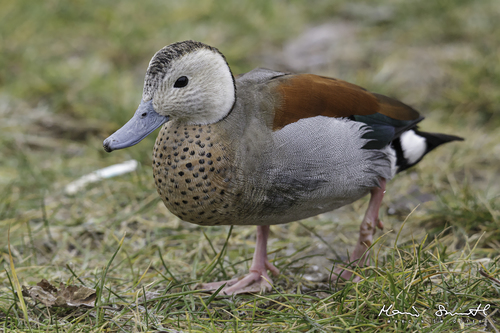
Ringed Teal
Callonetta leucophrys
A miniature marvel of the wetlands, the Ringed Teal is one of the most colorful ducks in the world. With its unique habit of perching in trees and its striking salmon-pink breast, this South American native is a prized sight for any backyard observer.
Quick Identification
Size
Length: 35-38 cm (14-15 in); Wingspan: 55-60 cm (22-24 in); Weight: 190-360 g (6.7-12.7 oz)
Colors
Males have a salmon-pink breast with black spots, chestnut-colored back, and grey flanks. Females are olive-brown with white facial spots and a barred breast. Both have a prominent white wing patch.
Key Features
- Distinct black stripe from crown down the back of the neck
- Vibrant salmon-colored breast with dark speckling in males
- White facial markings and eye-stripe in females
- Bright blue bill and pinkish-red legs
When You’ll See Them
Behavior
In a backyard or pond setting, they are generally peaceful and less skittish than larger waterfowl. They spend a significant portion of their morning foraging and preening. Their flight is notably fast and direct, often weaving through tree canopies with ease, which is a rare trait for ducks. While they are vocal, their calls are relatively quiet, consisting of soft whistles from the males and harsh quacks from the females.
EverydayEarth exclusive
Camera Tips
For baiting in a backyard pond environment, floating waterfowl pellets or cracked corn placed in shallow water (2-4 inches deep) will encourage them to linger. If you are using an AI-powered camera, ensure the 'Bird' or 'Duck' detection mode is active, but consider increasing the sensitivity for the afternoon hours. Because their salmon and chestnut plumage is highly reflective, avoid placing cameras in direct midday sunlight, which can blow out the colors in your photos; instead, aim for locations with dappled shade or eastern exposure for beautiful morning light.
During the breeding season, Ringed Teals look for tree cavities or nest boxes. Mounting a camera about 6 feet high and 10 feet away from a specialized wood duck box can yield incredible footage of the pair inspecting the nest. Use a fast shutter speed or a high-frame-rate video setting (60fps+) if your camera allows, as their movements when landing on perches are lightning-fast. In suburban areas where they may be kept as exotic pets, they are most active during the spring when they are searching for nesting sites.
Similar Species
Species that look similar or are commonly confused with Ringed Teal.
Frequently Asked Questions
Record Ringed Teal at your habitat
Connect a camera to start building your own species record — AI identifies every visitor automatically.