Ringwood
Syzygium anisatum
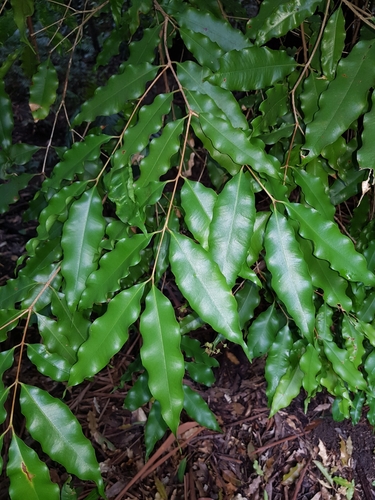
Meet the Ringwood, Australia’s rare 'Aniseed Tree' that turns your backyard into a fragrant rainforest retreat. Its aromatic leaves and fluffy spring blossoms make it a magnet for colorful native wildlife.
Quick Identification
Size
Height of 15-45 metres (50-150 feet); trunk diameter up to 90 cm (35 inches)
Colors
Glossy dark green leaves, creamy-white flowers, and small purple-to-black berries
Key Features
- Leaves emit strong aniseed aroma when crushed
- Dense, pendulous or 'weeping' canopy
- Small, fluffy white flower clusters in spring
- Narrow, lance-shaped leaves with wavy margins
When You’ll See Them
Geographic range
Where Does the Ringwood Live?
The Ringwood is a rare endemic species native to the Australian continent. It occupies an extremely limited geographic range on the mid-north coast of New South Wales, primarily found in the lush, high-rainfall areas between the Nambucca and Richmond Rivers. While once quite restricted, its popularity in bush-tucker gardens and urban landscaping has seen its presence expand into coastal suburban gardens and botanical collections across Australia's eastern seaboard.
Basemap © OpenStreetMap contributors
Behavior
The Ringwood, also known as the Aniseed Tree, is a majestic evergreen that exhibits a slow but steady growth habit. In its natural rainforest environment, it often begins its life in the dappled shade of the understory, eventually reaching upward to become a significant part of the canopy. It is highly valued for its dense foliage which provides excellent screening and habitat for local fauna.
Unlike many other Syzygium species, the Ringwood is particularly noted for its high essential oil content. It follows a distinct seasonal cycle, coming into full, spectacular bloom during the late spring. During this time, the tree becomes a hive of activity, as its nectar-rich blossoms attract an array of pollinators, from native bees to honey-eating birds, creating a miniature ecosystem within its branches.
EverydayEarth exclusive
Camera Tips
When capturing the Ringwood on your backyard camera, focus on the tree's unique architectural form. To document its growth or seasonal changes, mount your camera at a height of 5-6 feet on a neighboring structure or tree, angled slightly downward to capture the glossy sheen of the canopy. If you are using an AI-powered camera like those from EverydayEarth, position it near the outer branches during late spring to trigger captures of the diverse bird and insect life attracted to the fluffy white flowers.
For those interested in the 'bush-tucker' aspect, use a macro lens or a close-up setting to capture the detail of the leaves and the small, dark fruits. The fruits are relatively small, so high-resolution settings are essential. Because the Ringwood has very glossy leaves, try to avoid direct midday sun which can cause harsh glares and 'blow out' your images; early morning or late afternoon light provides a softer glow that highlights the leaf texture and rich green hues.
If you are monitoring for wildlife interaction, place the camera near the mid-canopy where honeyeaters and fruit-bats are most likely to visit. Since the Ringwood is a favorite for nocturnal foragers like possums, ensure your camera has a strong infrared flash for night captures. Time-lapse settings are particularly rewarding with this species, allowing you to watch the spectacular 'flushing' of new pinkish-bronze growth that appears after heavy rains.
Similar Species
Species that look similar or are commonly confused with Ringwood.
Frequently Asked Questions
Record Ringwood at your habitat
Connect a camera to start building your own species record — AI identifies every visitor automatically.