River Cooter
Pseudemys concinna
The River Cooter is the sun-worshipper of the American waterways, easily recognized by its 'pinstriped' suit and a penchant for crowding onto basking logs. A gentle giant of the turtle world, it plays a vital role in keeping river ecosystems healthy by grazing on aquatic plants.
Quick Identification
Size
Carapace length of 9 to 13 inches (23-33 cm), reaching up to 16 inches (40 cm); weight ranges from 4-11 lbs (1.8-5 kg)
Colors
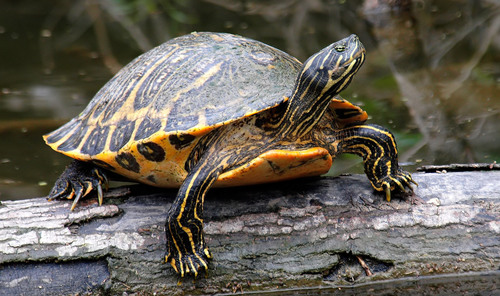
Dark olive to brownish-black shell with intricate yellow C-shaped markings; head and neck are dark with numerous thin, bright yellow longitudinal stripes
Key Features
- Distinctive yellow 'C' marking on the second pleural scute
- Intricate yellow pinstriping on head, neck, and legs
- Flatter, more streamlined shell compared to pond sliders
- Serrated edge on the rear of the carapace
When You’ll See Them
Behavior
Despite their social nature with other turtles, they are incredibly shy around humans. At the slightest vibration or movement on the bank, they will slide silently into the water to hide. During the nesting season in late spring, females become more terrestrial, traveling up to several hundred yards from the water to find the perfect sandy soil to deposit their eggs.
EverydayEarth exclusive
Camera Tips
Because Cooters are extremely wary of movement, motion-activated cameras are your best tool, but they require careful calibration. Set your trigger speed to the fastest possible setting; while they move slowly while basking, they can dive into the water in a split second if startled. Since they are diurnal, ensure your camera is optimized for daytime high-contrast settings to handle the glare of the sun reflecting off the water and their wet shells. If your camera allows for it, a polarizing filter can significantly reduce this glare and make the yellow pinstripes pop in your photos.
If you have a backyard pond or a property bordering a river, you can encourage them into camera range by providing a stable, anchored basking platform in a sunny spot. While traditional baiting isn't effective for these herbivores, placing your camera near a known nesting area in May or June can yield incredible footage of females moving inland. Look for soft, sandy soil within 100 yards of the water's edge. During these months, setting your camera to 'Time Lapse' mode every 5 to 10 minutes can capture the slow journey of a nesting female that might not be fast enough to trigger a standard PIR motion sensor.
Similar Species
Species that look similar or are commonly confused with River Cooter.
Frequently Asked Questions
Record River Cooter at your habitat
Connect a camera to start building your own species record — AI identifies every visitor automatically.