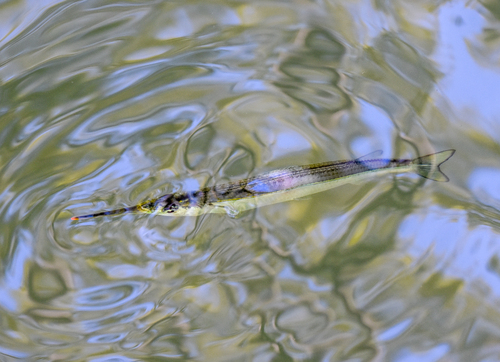
River Garfish
Hyporhamphus regularis
A shimmering silver resident of Australia's estuaries, the River Garfish is famous for its unique 'halfbeak' and a vibrant red-tipped jaw that darts through the surface of the water.
Quick Identification
Size
20–40 cm (8–16 inches) in length; typically weighs between 100g and 250g (0.2–0.5 lbs)
Colors
Silvery-white belly and sides with a translucent greenish or bluish back; most distinctive for the bright red or orange-red tip on the elongated lower jaw
Key Features
- Elongated lower jaw with a prominent red tip
- Slender, cylindrical silver body
- Short, triangular upper jaw
- Dorsal and anal fins positioned far back toward the tail
When You’ll See Them
Geographic range
Where Does the River Garfish Live?
The River Garfish is native to the coastal and estuarine waters of Australia. Its range extends primarily across the southern half of the continent, from the subtropical waters of southern Queensland, down through New South Wales and Victoria, to the temperate reaches of Tasmania and across to Western Australia. This species thrives in the brackish transition zones where river systems meet the sea, making it a quintessential inhabitant of Australian coastal waterways.
Basemap © OpenStreetMap contributors
Behavior
In estuarine environments, they are often seen 'skipping' across the water surface if startled. While they are generally skittish around large movements, they are curious enough to congregate around dock lights at night. Their interaction with humans is primarily through recreational fishing, as they are a prized table fish, but they also serve as a vital indicator species for the health of seagrass meadows.
EverydayEarth exclusive
Camera Tips
For the best results, set your camera to trigger on movement during the rising tide. Garfish often move into shallower areas with the incoming tide to feed on floating organic matter. High-frame-rate settings are beneficial, as these fish can move surprisingly fast when schooling. If your camera is waterproof, a 'split-shot' setup—where the lens is half-submerged—can capture incredible footage of them skimming the surface.
Using a 'chum' or 'burley' of breadcrumbs or tuna oil can attract schools to a specific spot in front of your lens. However, check local regulations regarding feeding wildlife first. At night, a submerged green LED light is an excellent lure; it attracts the plankton that Garfish feed on, bringing the fish directly into your camera's field of view. Ensure your camera's night vision or external lighting is diffused to avoid 'hot spots' on their highly reflective silver scales.
Similar Species
Species that look similar or are commonly confused with River Garfish.
Frequently Asked Questions
Record River Garfish at your habitat
Connect a camera to start building your own species record — AI identifies every visitor automatically.