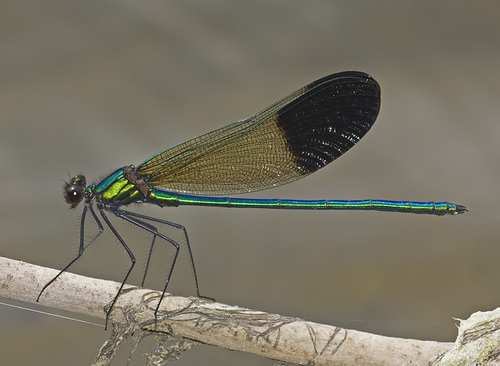
River Jewelwing
Calopteryx aequabilis
The River Jewelwing is a shimmering masterpiece of the waterfront, boasting metallic emerald bodies and elegant, dark-tipped wings. These fluttering gems are a hallmark of healthy, flowing northern streams and a favorite for backyard naturalists.
Quick Identification
Size
Total length of 45–55 mm (1.8–2.2 in) with a wingspan of approximately 60–75 mm (2.4–3.0 in).
Colors
Metallic green or bronze-green body; wings are mostly clear with distinct dark brown or black tips. Males have deeper black wing tips, while females have lighter, smoky-brown tips and a small white spot (pterostigma) near the wing edge.
Key Features
- Metallic emerald green or bronze body
- Broad wings with large dark patches at the tips
- Butterfly-like fluttering flight pattern
- Wings held vertically together when resting
- Large, widely separated compound eyes
When You’ll See Them
Behavior
River Jewelwings are the aerial acrobats of the stream bank. Unlike the darting, high-speed flight of dragonflies, these damselflies possess a buoyant, rhythmic fluttering motion that often causes them to be mistaken for butterflies at a distance. They are highly territorial, with males claiming specific patches of riverside vegetation to court females and ward off rival males using impressive 'wing-clapping' displays.
When they aren't defending their turf or searching for a mate, River Jewelwings are sit-and-wait predators. They spend hours perched on sun-drenched leaves or twigs overhanging the water, scanning the air for small flying insects. Once prey is spotted, they launch into a short, agile pursuit before returning to their perch to consume their catch. They are harmless to humans and are actually beneficial neighbors, as they help control populations of gnats and mosquitoes.
EverydayEarth exclusive
Camera Tips
Capturing the River Jewelwing on camera requires a focus on 'perch points.' Look for sun-exposed branches, reeds, or tall grasses that hang directly over the water's edge. These damselflies are creatures of habit and will often return to the exact same leaf after a hunting flight. Position your camera about 2 to 3 feet away from a prominent perch, ensuring the background is distant to create a beautiful blurred effect (bokeh) that makes the metallic body pop.
Because Jewelwings are relatively small, standard trail cameras may struggle to trigger or focus. For the best results, use a camera with a dedicated macro mode or a high-resolution sensor that allows for cropping. If using a smart bird feeder camera or a portable AI camera, place it near a water feature or a stand of native riverside plants like Buttonbush or Joe-Pye Weed. Ensure the sun is behind the camera or to the side; direct sunlight is essential to catch the iridescent structural coloration of their green bodies.
Triggering can be a challenge with insects. Use 'high-speed' or 'burst' settings if your camera supports them, as their wings move rapidly even when perching. If your AI camera has a 'small animal' or 'insect' detection mode, ensure it is enabled. On very hot days, they may move into the shade, but for the most part, you want to target the brightest parts of the morning when they are warming up their flight muscles. Avoid using heavy baits; instead, focus on providing a clear, attractive landing spot like a bamboo stake placed near the water.
Similar Species
Species that look similar or are commonly confused with River Jewelwing.
Ebony Jewelwing
The Ebony Jewelwing has entirely charcoal-black wings in males, whereas the River Jewelwing only has dark pigment on the wing tips.
American Rubyspot
Rubyspots have a bright red patch at the base of the wing rather than dark tips, and their bodies are often more bronze than bright emerald.
Frequently Asked Questions
Record River Jewelwing at your habitat
Connect a camera to start building your own species record — AI identifies every visitor automatically.