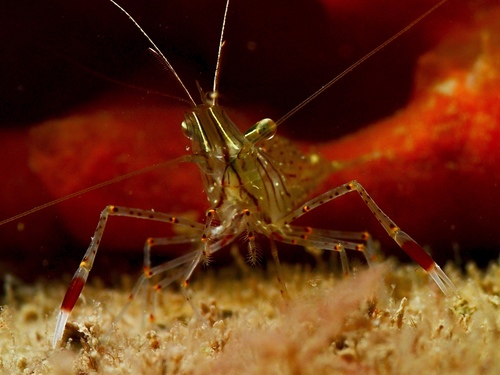
rock-pool shrimp
Palaemon serenus
The rock-pool shrimp is a translucent marvel of the Australian shoreline, famous for its 'red-handed' appearance and busy scavenging habits. These tiny crustaceans are the hidden gems of the intertidal zone, turning every coastal puddle into a bustling underwater city.
Quick Identification
Size
Maximum length of approximately 60 mm (2.4 inches)
Colors
Translucent body with fine reddish-brown longitudinal lines; distinctive red bands on the pincers (cheliped joints)
Key Features
- Vibrant red bands on the pincer joints
- Transparent body with intricate dark striping
- Prominent upward-curving rostrum (nose spike) with teeth
- Two pairs of long, sensitive white antennae
When You’ll See Them
Geographic range
Where Does the rock-pool shrimp Live?
The rock-pool shrimp is a proud native of the Australian coastline, thriving in the temperate and subtropical waters of the southern and eastern regions. Its primary range extends from the sunshine coast of southern Queensland, following the coastline south through New South Wales and Victoria, and reaching across to the southern shores of Western Australia. It is also a very common sight along the rocky peripheries of Tasmania, making it one of the most widespread coastal invertebrates in the country.
Basemap © OpenStreetMap contributors
Behavior
Rock-pool shrimp are the busy custodians of the Australian coastline. They are highly active scavengers, constantly picking through algae and crevices with their small pincers. While they are bold when searching for food, they are also incredibly fast; at the first sign of a predator, such as a fish or a shorebird, they use a powerful flick of their muscular tail (the 'caridoid escape reaction') to dart backward into the safety of a rocky overhang.
These shrimp are social creatures, often found in large clusters within a single permanent rock pool. They spend much of their time grooming themselves or interacting with neighbors. In a backyard setting that borders an estuary or rocky shore, they can be seen at low tide congregating in the shallowest water, where they are less likely to be eaten by larger fish that cannot enter the thin water column.
EverydayEarth exclusive
Camera Tips
To capture the rock-pool shrimp on camera, you will need a waterproof action camera or a specialized underwater housing. Unlike land animals, shrimp respond to the tide rather than the sun. The best placement is in a permanent rock pool—one that remains filled even at low tide. Secure your camera to a heavy diving weight or a flat rock using a heavy-duty rubber band or mount. Position the lens to face a small 'clearing' in the pool floor or a crevice where shrimp are likely to gather. Keep the camera low to the ground to get a dramatic, eye-level perspective of their translucent bodies.
Bait is the secret to getting a 'shrimp party' on film. Place a small mesh bag containing a crushed mussel, a piece of oily pilchard, or even a bit of cat food just in front of the camera lens. The scent will travel through the water, and within minutes, the rock-pool shrimp will emerge from the shadows. To ensure the camera stays focused on these small subjects, use a 'Macro' setting if available, or ensure the camera is at least 30cm (12 inches) away from the bait to avoid blurry footage.
Lighting is the biggest challenge in rock pools. On a bright, sunny day, the glare from the water's surface can ruin the shot. Try to film during an overcast day or use a polarizing filter to cut through the reflection. If you are filming at night, which is when the shrimp are often boldest, use a diffused underwater torch. Direct, harsh light can overexpose their transparent bodies, making them look like white ghosts. A side-lit setup will highlight the red bands on their 'hands' and the delicate structure of their antennae.
Finally, patience and tide-watching are key. Check the local tide charts and set your camera just as the tide is receding. This is when the shrimp are most active, scavenging for food left behind by the falling water. If your backyard overlooks an estuary, look for rocky outcrops or man-made structures like jetty pylons, which offer similar hiding spots and make excellent locations for a stationary underwater camera rig.
Similar Species
Species that look similar or are commonly confused with rock-pool shrimp.
Frequently Asked Questions
Record rock-pool shrimp at your habitat
Connect a camera to start building your own species record — AI identifies every visitor automatically.