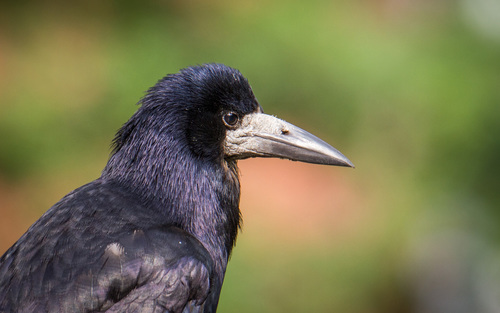
Rook
Birds diurnal

Rook

Corvus frugilegus

The Rook is a master of social living, recognizable by its 'baggy trousers' and distinctive silvery face. These intelligent, vocal corvids turn any backyard into a bustling hub of activity and complex bird politics.

0 Sightings
0 Habitats

Quick Identification

straighten

Size

Length: 44–46 cm (17–18 in); Wingspan: 81–99 cm (32–39 in); Weight: 280–530 g (10–19 oz)

palette

Colors

Uniformly black plumage with a distinct purple or blue oily sheen in sunlight; adults feature a characteristic patch of bare, greyish-white skin at the base of the bill.

visibility

Key Features

  • Bare, pale grey-white skin around the base of the bill
  • Shaggy 'thigh' feathers giving a 'baggy trousers' appearance
  • Peaked or 'steep' forehead profile
  • Highly gregarious behavior, rarely seen alone

When You’ll See Them

schedule
Activity pattern diurnal
brightness_5
Peak hours First light until 10 AM; late afternoon before sunset
calendar_month
Season Year-round, but most active near cameras during the spring nesting season (March–May)
restaurant
Diet Omnivorous and opportunistic. They primarily eat earthworms, soil invertebrates, and grain, but will also take fruit, small mammals, eggs, and human food scraps.
park
Habitat Open agricultural land, parks, large gardens, and village greens with nearby tall trees for nesting.

bar_chart
Loading activity data...

Behavior

Rooks are the ultimate socialites of the bird world, almost always found in busy, noisy flocks. They are famous for their colonial nesting sites, known as rookeries, which are established in the very tops of tall trees. Within these colonies, rooks engage in complex social interactions, including 'gift-giving' of sticks and food to mates and neighbors. They are highly intelligent and have been observed using tools in controlled environments, though in the wild, their brilliance is best seen in their coordinated foraging and sentinel behavior.

In a backyard setting, rooks are bold and opportunistic but maintain a degree of wariness. They spend much of their day on the ground, walking with a characteristic swagger or a series of hops. Their communication is constant; a flock of rooks creates a distinctive soundscape of harsh 'kaah' calls that serve to keep the group cohesive while moving between feeding grounds and their roosts.

photo_camera EverydayEarth exclusive

Camera Tips

To capture the best footage of Rooks, ground-level placement is essential. Position your camera 12 to 24 inches off the ground, secured to a short stake or the base of a tree. Aim the lens at a flat, open area of the lawn where you have scattered bait. Because Rooks are social and often arrive in groups, use a wide-angle setting to ensure you capture the interactions between multiple birds rather than just a single close-up of a tail feather.

Attracting Rooks to a specific spot is best achieved using high-energy foods. They are particularly fond of unsalted peanuts (in or out of the shell), suet pellets, and even soaked dog kibble. Spread the food in a 'scatters-feed' pattern over a 3-foot radius to encourage natural foraging behavior and movement. If you have a low-profile birdbath, placing the camera nearby can result in spectacular 'splash' shots, as Rooks are vigorous bathers and often visit the water in small groups.

Rooks are extremely observant and may be 'camera shy' if they notice a new, shiny object in their environment. To mitigate this, use a camera with a non-reflective finish or apply a camo-wrap. If possible, set the camera out in its housing (without recording) for two days prior to your actual shoot to let the birds acclimate to its presence. For settings, prioritize a fast shutter speed or a high frame rate (60fps or higher) to capture their quick, jerky head movements and the intricate details of their iridescent feathers.

During the spring, you can attract them with nesting material. Place a pile of birch twigs or dried mud near your camera site. Watching a Rook carefully select the 'perfect' stick for its nest in the rookery provides a fascinating glimpse into their domestic lives. Early morning light is your best friend; the low sun will catch the purple and blue sheen of their plumage, which often looks flat black in the harsh midday sun.

Frequently Asked Questions

Rooks are strictly diurnal, meaning they are active during daylight. They are most energetic immediately after sunrise when they leave their rookery to forage, and again in the late afternoon before they return to their communal roosts for the evening.
The best way to attract Rooks is to provide ground-based food like unsalted peanuts, suet, or grain in an open area. They prefer large, open spaces where they can see predators approaching. A large, shallow ground-level water dish is also a huge draw for them.
Rooks have a varied diet consisting of earthworms, insects, seeds, and cereal grains. They use their strong, pointed bills to probe the soil. In gardens, they will happily eat birdseed mixes, suet, and kitchen scraps like cooked potatoes or fruit.
Yes, while they are traditionally associated with farmland and 'rookeries' in tall country trees, they frequently visit suburban gardens and parks, especially those near the edges of towns or close to agricultural fields.
The easiest way to tell them apart is the face: adult Rooks have a bare, whitish-grey patch around the base of the beak, while Crows have black feathers all the way to the beak. Rooks also have 'shaggy' feathers on their legs (trousers) and usually travel in larger groups than the often-solitary Crow.

Record Rook at your habitat

Connect a camera to start building your own species record — AI identifies every visitor automatically.

Join free Identify a photo