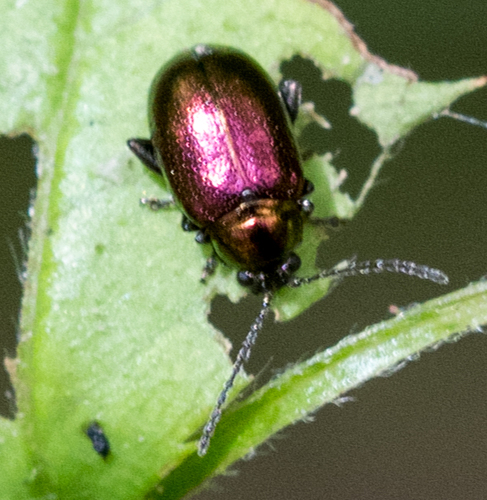
Rose Flea Beetle
Altica rosae
The Rose Flea Beetle is a tiny, shimmering jewel of the garden, recognizable by its metallic blue-green sheen and remarkable jumping power. Often found on rose bushes, this resilient insect is a testament to the complex ecosystems thriving right in our backyards.
Quick Identification
Size
Adults typically measure between 3 to 4 mm (0.12 to 0.16 inches) in length.
Colors
Metallic blue, dark metallic green, or purple-bronze; shiny elytra (wing covers) with no distinct spots.
Key Features
- Metallic blue or green oval body
- Enlarged hind legs adapted for jumping
- Skeletonized leaf damage on host plants
- Small size (approx. 4mm)
- Diurnal activity on rose foliage
When You’ll See Them
Geographic range
Where Does the Rose Flea Beetle Live?
Native to the North American continent, the Rose Flea Beetle is widely distributed across the United States and southern Canada. Its presence is most concentrated in temperate regions where its primary host plants, both wild and cultivated roses, thrive. Because they are so closely linked to garden roses, they are a common sight in backyard habitats from the Atlantic to the Pacific coast, thriving wherever humans plant ornamental flower beds.
Basemap © OpenStreetMap contributors
Behavior
Rose Flea Beetles are highly active insects known for their impressive jumping ability. When approached or disturbed, they use their powerful hind legs to launch themselves into the air, a defense mechanism that makes them difficult to catch or observe closely without complete stillness. They are primarily solitary feeders but can appear in large clusters on a single plant if the host is particularly healthy or the population is peaking.
Their life cycle is closely tied to their host plants. Adults emerge in spring to feed and lay eggs on the undersides of leaves. The larvae are small, dark, and grub-like, often feeding alongside the adults. While they are considered a garden pest by some rose enthusiasts due to the aesthetic damage they cause to leaves, they are a fascinating example of specialized herbivory and play a role in the local food web, providing a reliable food source for predatory insects and small backyard birds.
EverydayEarth exclusive
Camera Tips
Capturing the Rose Flea Beetle requires a macro lens or a camera with a very high-quality close-up capability. Since these beetles are only 3-4mm long, a standard wide-angle trail camera likely won't trigger or focus correctly on such a small subject. We recommend using an AI-powered macro-camera or a specialized insect camera mounted directly onto a rose bush or a garden stake positioned within 6 to 10 inches of active rose foliage.
For the best results, focus your lens on the upper surface of new leaf growth or around the flower buds, where adults frequently congregate to feed. To increase the likelihood of capturing their signature 'jump,' set your camera to a high frame rate or burst mode. Because they are diurnal and their beauty lies in their iridescence, ensure your setup is in a spot that receives plenty of bright, indirect sunlight, which will make their metallic blue or green shells shimmer brilliantly in the footage.
Lighting is your best friend when documenting these tiny gems. Avoid harsh mid-day direct sun, which can cause 'blown out' highlights on their metallic bodies; instead, aim for the soft light of mid-morning. If you are using a trigger-based system, set the sensitivity to its highest level and ensure there are no large swaying branches in the background that might cause false triggers. Using a white card or light-colored mulch beneath the plant can also help bounce light onto the underside of the leaves where they often hide from the heat.
Similar Species
Species that look similar or are commonly confused with Rose Flea Beetle.
Frequently Asked Questions
Record Rose Flea Beetle at your habitat
Connect a camera to start building your own species record — AI identifies every visitor automatically.