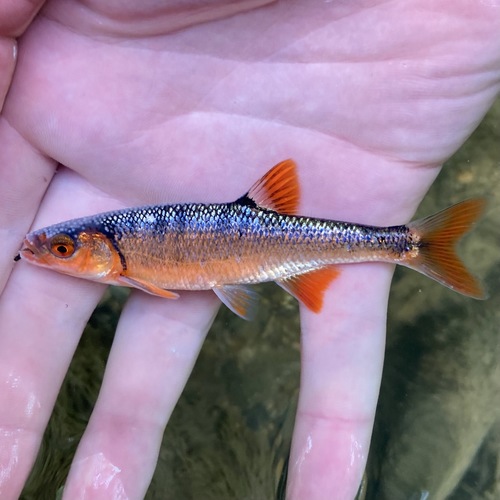
Rosefin Shiner
Lythrurus ardens
A hidden gem of Appalachian waterways, the Rosefin Shiner transforms from a subtle silver minnow into a blushing masterpiece during the spring. Watching a school of these vibrant fish dance over a stream bed is one of nature's most overlooked spectacles.
Quick Identification
Size
Small and slender, typically reaching 2.5 to 3.5 inches (6.5 to 9 cm) in length.
Colors
Silvery body with a blue-violet iridescent sheen. Breeding males develop brilliant rose-red or orange-red fins and a dark spot at the base of the dorsal fin.
Key Features
- Distinctive black spot at the front base of the dorsal fin
- Compressed, slab-sided body shape
- Vibrant red-to-pink fins on spawning males
- Very small, crowded scales on the nape area
When You’ll See Them
Behavior
Rosefin Shiners are energetic, schooling fish that bring life to the riffles and pools of Appalachian streams. They are most famous for their "nest association" behavior. Rather than building their own nests, they congregate over the large pebble mounds built by Bluehead Chubs or other larger minnows. By laying their eggs in these established nests, they benefit from the aeration and protection provided by the host fish.
These fish are highly active during the day, constantly darting through the water column to catch drifting prey. While they are generally peaceful, males become highly territorial and competitive during the spring spawning season, engaging in shimmering displays and minor scuffles to secure the best position over a nesting site. They are sensitive to water quality and serve as excellent indicators of a healthy stream ecosystem.
EverydayEarth exclusive
Camera Tips
Capturing the Rosefin Shiner requires an underwater approach. Use an action camera like a GoPro or a dedicated underwater trail camera in a waterproof housing. The best placement is in shallow water (6-12 inches deep) near a "pebble mound"—the nest of a Chub. Weight your camera rig with a diving weight or a heavy flat stone to prevent it from being swept away by the current. Aim the lens horizontally across the top of the nest where the light is brightest.
Lighting is the most critical factor for showing off their iridescent colors. Schedule your filming for a bright, sunny day when the sun is directly overhead to penetrate the water surface. Avoid early morning or late evening shots, as the high contrast and surface reflections will make the fish look like dark shadows. If possible, position the camera so the sun is behind it, illuminating the fish's silver and red scales directly.
For the best results, use a high frame rate setting (at least 60fps). These fish move incredibly fast, and slow-motion playback is often the only way to truly appreciate their spawning dances and territorial displays. During the peak of the spring spawn, the water can become crowded; a wide-angle lens is preferable to capture the scale of the schooling activity. Be patient—it usually takes 15 to 20 minutes for the fish to become comfortable with the camera's presence before they return to their natural behavior.
Similar Species
Species that look similar or are commonly confused with Rosefin Shiner.
Redfin Shiner
Very similar but typically found in slower, siltier water and lacks the specific nape scale pattern of the Rosefin.
Bluehead Chub
Much larger and stouter; these are the 'engineers' that build the pebble nests Rosefin Shiners use.
Mountain Redbelly Dace
Also turns bright red, but has two distinct dark horizontal stripes along its sides rather than a silvery-blue body.
Frequently Asked Questions
Record Rosefin Shiner at your habitat
Connect a camera to start building your own species record — AI identifies every visitor automatically.