Rosyface Shiner
Notropis rubellus
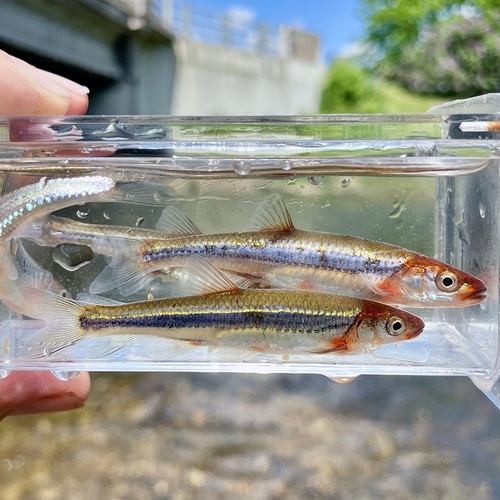
A shimmering inhabitant of North America's clearest streams, the Rosyface Shiner is best known for the stunning crimson blush it wears during the spring. These athletic minnows are a delight to watch as they dance through rushing currents.
Quick Identification
Size
2 to 3.5 inches (5 to 9 cm) in length
Colors
Silvery-white belly with an olive to blue-green iridescent back; males develop a brilliant rose-red color on the head and fin bases during spawning.
Key Features
- Slender, elongated body shape
- Pointed snout with a relatively large mouth
- Dorsal fin origin is located behind the pelvic fin origin
- Vivid red-pink 'blushing' on the head during spring
When You’ll See Them
Behavior
Rosyface Shiners are high-energy, social fish that spend their lives in schools, often numbering in the dozens. They are exceptionally agile swimmers, preferring the swifter currents of clear streams where oxygen levels are high. Unlike many other minnows that forage along the bottom, the Rosyface Shiner is often found in the middle of the water column or near the surface, darting rapidly to catch prey drifting in the current.
During the breeding season, their social behavior becomes even more frenetic. They are known as 'nest associates,' frequently congregating over the gravel nests built by larger fish species like Creek Chubs or Stonerollers. While they are peaceful towards humans and other species, they are highly sensitive to pollution and silt, making them an excellent 'bio-indicator' for the health of a local watershed.
EverydayEarth exclusive
Camera Tips
To capture the Rosyface Shiner, you will need an underwater camera setup. Because these fish prefer clear, moving water, the best placement is in a shallow riffle or the 'tail-out' of a pool where the water begins to accelerate. Use a waterproof action camera mounted to a weighted base or a heavy stone to ensure the current doesn't sweep your equipment away. Position the lens horizontally, roughly 3-5 inches above the stream bed, facing slightly upstream to catch the fish as they swim against the current.
Timing is critical for the best visual results. Aim for a bright, sunny day between late morning and mid-afternoon. The high sun angle helps penetrate the water surface and illuminates the iridescent scales of the shiners. If you are filming during the spawning season (late spring), look for areas with clean, pea-sized gravel; this is where the males will display their most vibrant red colors. Using a polarizing filter on your lens can also help reduce surface glare if your camera is partially submerged.
While you can't easily 'bait' a fish camera in a fast stream, you can trigger activity by gently scuffing the gravel about three feet upstream from your camera. This kicks up natural 'macroinvertebrates' (insect larvae), which will drift past the lens and likely attract a school of hungry shiners into the frame. For the best clarity, set your camera to a high frame rate (60 fps or higher) to minimize motion blur as these fish move incredibly fast when feeding.
Similar Species
Species that look similar or are commonly confused with Rosyface Shiner.
Carmine Shiner
Nearly identical in appearance, but generally found further west in the Missouri River drainage; requires genetic testing or precise geography to distinguish.
Emerald Shiner
Has a more blunt snout and a more transparent, emerald-tinged body compared to the slender Rosyface.
Common Shiner
Much deeper-bodied and larger, with taller scales that look like vertical diamonds on its sides.
Frequently Asked Questions
Record Rosyface Shiner at your habitat
Connect a camera to start building your own species record — AI identifies every visitor automatically.