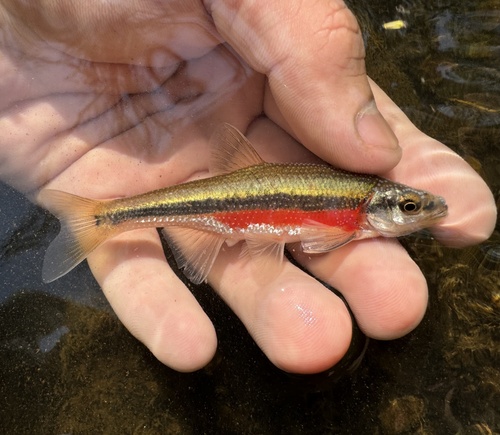
Rosyside Dace
Clinostomus funduloides
A hidden gem of Appalachian streams, the Rosyside Dace is a small fish with a big personality. Known for its vivid red breeding colors and acrobatic hunting style, it is a favorite for backyard stream enthusiasts.
Quick Identification
Size
6.5 to 11.5 cm (2.5 to 4.5 inches) in length
Colors
Olive to brownish-green back with a dark lateral stripe; males develop vibrant rosy-red or pink sides during the spring breeding season
Key Features
- Unusually large, upturned mouth for a minnow
- Dark lateral stripe running from snout to tail
- Deep-bodied, compressed profile
- Rosy-red coloration on the front half of the body in males
- Relatively large eyes
When You’ll See Them
Geographic range
Where Does the Rosyside Dace Live?
Native to the North American continent, the Rosyside Dace is found exclusively within the eastern United States. Its primary range extends from the Susquehanna River drainage in Pennsylvania and New York southward through the Appalachian highlands to the Savannah River in Georgia. It is also found in the Tennessee and Ohio River basins, particularly in the clean, high-gradient streams of the Piedmont and Mountain regions.
Basemap © OpenStreetMap contributors
Behavior
During the spring, these fish display complex social behaviors centered around spawning. They are famous 'nest associates,' meaning they don't build their own nests but instead use the gravel mounds constructed by larger fish like Chubs or Fallfish. This relationship is fascinating to watch, as dozens of brightly colored dace will hover over a single nest, waiting for the opportunity to deposit their eggs alongside the host's.
EverydayEarth exclusive
Camera Tips
Lighting is the most critical factor for underwater fish photography. Position your camera so the sun is behind it or directly overhead to illuminate the fish's sides. Because these fish are shiny, direct midday sun can create harsh reflections, so slightly overcast days or morning hours can often produce a softer, more natural look that highlights the red hues of the males. If your camera allows for it, a polarizing filter can help remove the 'shimmer' from the water's surface if you are filming from a high angle.
Rosyside Dace are curious but cautious. After placing the camera, leave the area for 15-20 minutes to allow the school to return to their natural behavior. You can encourage them to stay in the frame by 'chumming' slightly—drop a few small pieces of fish food or freeze-dried bloodworms into the current upstream so they drift directly in front of the lens. Use a high frame rate (at least 60fps) because these fish move incredibly fast; slow-motion playback is often the only way to see their lightning-quick strikes at the surface.
Similar Species
Species that look similar or are commonly confused with Rosyside Dace.
Frequently Asked Questions
Record Rosyside Dace at your habitat
Connect a camera to start building your own species record — AI identifies every visitor automatically.