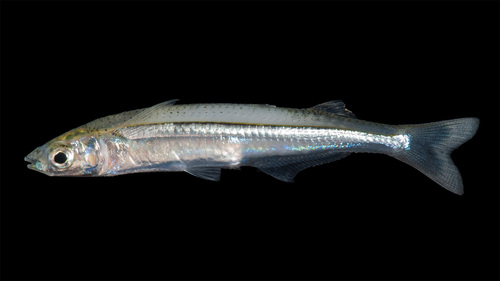
Rough Silverside
Membras martinica
Meet the shimmering ghost of the coastline. The Rough Silverside is a master of camouflage, using its translucent body and brilliant silver stripe to vanish into the sun-drenched waves of our estuaries.
Quick Identification
Size
Typically 7.5 to 10 cm (3 to 4 inches), reaching a maximum length of 12.5 cm (5 inches).
Colors
Translucent pale green or straw-colored back with a brilliant silvery lateral stripe; white to silver underside.
Key Features
- Distinctively rough-textured ctenoid scales
- Two widely separated dorsal fins
- Bright, reflective silver band running the length of the body
- Deeply forked tail fin
- Relatively large eyes and a small, upturned mouth
When You’ll See Them
Behavior
The Rough Silverside is a highly social, schooling fish that spends the majority of its life in the upper few inches of the water column. They are known for their fast, darting movements and their ability to blend into the shimmering surface of the water, a defense mechanism known as countershading. In the wild, they often form massive schools containing hundreds of individuals, which helps protect them from predators like seatrout, bluefish, and wading birds.
These fish are extremely sensitive to water quality and movement. They are active swimmers that rely on their streamlined bodies to navigate tidal currents in estuaries and coastal lagoons. While they are generally skittish around large moving objects, they can become quite bold when feeding on plankton blooms or small insects that land on the water's surface, often creating a 'boiling' effect on the water when the whole school feeds at once.
EverydayEarth exclusive
Camera Tips
Capturing the Rough Silverside requires a specialized approach since they are strictly aquatic and stay near the surface. If you have a dock or a seawall, the best setup is a submerged action camera or a dedicated underwater 'fishing' camera. Mount your camera 6 to 12 inches below the surface, facing parallel to the shoreline. Because these fish have reflective silver scales, direct midday sun can cause 'blowout' in your footage; try to position the camera so the sun is behind it, or film during the golden hours when the light is softer and highlights their translucent bodies.
To draw a school into your camera's field of view, you can use a small mesh bait bag filled with crushed shrimp or specialized fish attractant. However, even simple movement can attract them. Setting your camera to a high frame rate (60fps or higher) is crucial. Rough Silversides move with incredible speed and change direction in a fraction of a second; standard frame rates often result in a silver blur rather than a clear image of the fish.
If you are using a camera from above the water (like a pier-mounted bird cam), a circular polarizer lens is an absolute necessity. This will cut through the surface glare and reflections, allowing the camera to see the schools moving just beneath the surface. Look for 'shimmering' patches of water or groups of small splashes, which usually indicate a feeding school. During the spring spawning season, they often move into very shallow water near vegetation, providing the best opportunity for close-up shots.
Similar Species
Species that look similar or are commonly confused with Rough Silverside.
Frequently Asked Questions
Record Rough Silverside at your habitat
Connect a camera to start building your own species record — AI identifies every visitor automatically.