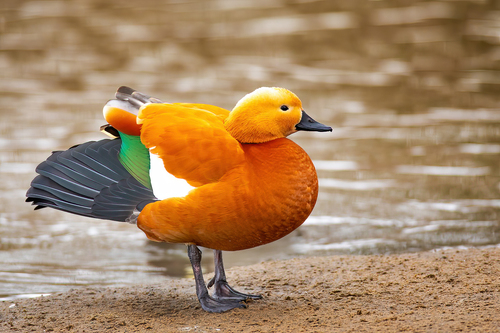
Ruddy Shelduck
Tadorna ferruginea
A stunning, cinnamon-colored waterfowl known for its goose-like honk and striking white wing patches. Whether grazing in a field or gliding across a mountain lake, the Ruddy Shelduck is a masterpiece of the avian world.
Quick Identification
Size
58-70 cm (23-28 in) in length; 110-135 cm (43-53 in) wingspan; weight 1.2-1.6 kg (2.6-3.5 lbs)
Colors
Bright orange-brown or cinnamon body plumage with a paler, creamy head. The tail and flight feathers are black, and the wings feature large, striking white coverts and a green speculum.
Key Features
- Vibrant rusty-orange body plumage
- Pale creamy-white head and neck
- Large white wing patches visible during flight
- Loud, nasal honking call similar to a goose
- Small black ring around the neck in breeding males
When You’ll See Them
Geographic range
Where Does the Ruddy Shelduck Live?
Native to a vast expanse of the Old World, the Ruddy Shelduck maintains a primary breeding range stretching from southeastern Europe through Central Asia to China. In the winter months, these populations migrate southward to the Indian subcontinent and parts of Southeast Asia to find ice-free wetlands. Additionally, resident populations persist in North Africa and the Ethiopian Highlands, while feral populations have become increasingly common across Western Europe, particularly in Switzerland and Germany.
Basemap © OpenStreetMap contributors
Behavior
The Ruddy Shelduck is often described as more goose-like than duck-like, both in its upright posture and its vocal, assertive personality. They are highly social birds outside of the breeding season, frequently gathering in large flocks on lakes and rivers. However, during nesting, they become fiercely territorial and are known to drive away other waterfowl from their chosen site. They are primarily nocturnal or crepuscular foragers but remain quite active during the day, especially when undisturbed.
Unlike many other ducks, Ruddy Shelducks are quite comfortable walking on land and spend a significant amount of time grazing in fields or along the muddy margins of wetlands. They are famous for their loud, trumpeting 'ang-ang' calls which can be heard from a great distance. In many parts of their range, particularly in Buddhist regions, they are considered sacred and have become remarkably tame around human settlements, though wild populations remain wary and difficult to approach.
EverydayEarth exclusive
Camera Tips
To capture the Ruddy Shelduck on a backyard or trail camera, focus on the transition zones between water and land. These birds prefer to walk out of the water to graze, so placing your camera 1-2 feet off the ground, angled slightly downward toward a muddy bank or a flat grassy patch near a pond, is ideal. Ensure the camera has a wide-angle lens if possible, as these are large birds and can easily fill a frame if they get too close to the sensor.
Since they are highly vocal, setting your camera to record video with high-quality audio is a must. Their distinctive honking is a key part of their presence. If you are trying to attract them to a specific spot for a photo op, a small amount of grain or birdseed scattered near the water's edge can work, but they are generally more attracted to the safety and openness of a well-maintained shoreline where they can see predators coming.
Lighting is crucial for this species; their orange plumage is spectacular but can easily 'blow out' and look like a solid blob of color in direct, harsh midday sun. Aim your camera North or South to avoid direct lens flare, and look for settings that handle high contrast well. Early morning or late afternoon light—the 'golden hour'—perfectly complements their cinnamon feathers, making for truly professional-looking captures.
Similar Species
Species that look similar or are commonly confused with Ruddy Shelduck.
Frequently Asked Questions
Record Ruddy Shelduck at your habitat
Connect a camera to start building your own species record — AI identifies every visitor automatically.