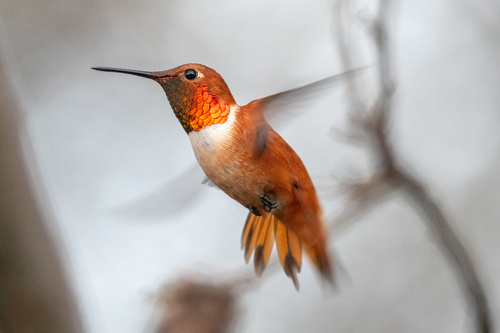
Rufous Hummingbird
Selasphorus rufus
The copper-colored daredevil of the sky. Known for its incredible 3,000-mile migration and feisty personality, the Rufous Hummingbird is a vibrant jewel for any backyard camera enthusiast.
Quick Identification
Size
Length: 7–9 cm (2.8–3.5 in); Wingspan: 11 cm (4.3 in); Weight: 2–5 g (0.07–0.18 oz)
Colors
Males feature bright copper-orange (rufous) backs, flanks, and tails with a brilliant iridescent reddish-orange throat. Females are green above with rufous-washed flanks and white-tipped tail feathers.
Key Features
- Solid copper-orange back and belly (males)
- Iridescent orange-red throat gorget
- Slender, needle-like black bill
- Distinctive 'chu-chu-chu' chatter and aggressive diving behavior
When You’ll See Them
Sightings on EverydayEarth
Apr 1, 2026
Several hummingbirds are gathered at a red saucer-style feeder. Two Anna's hummingbirds are perched on the left and center, while another is initially on the right. A male Rufous hummingbird with a vibrant iridescent throat arrives and takes a spot on the right side of the feeder, briefly displacing the previous occupant.
Mar 31, 2026
An adult hummingbird is perched on a branch just above a small, lichen-covered nest. Inside the nest, two feathered chicks are nestled together, resting quietly. The adult bird remains vigilant, looking around while maintaining its position on the branch.
Mar 31, 2026
A rufous-colored hummingbird is perched on the right side of a red nectar feeder. A second, green-backed hummingbird flies into the frame from the left and begins feeding alongside the first. The two birds share the feeder for several seconds, occasionally glancing at each other while drinking.
Behavior
The Rufous Hummingbird is famous for being one of the most territorial and feisty birds in North America. Despite its tiny size, it is a fearless defender of its feeding grounds, frequently chasing away much larger birds, bees, and even other hummingbirds. They are solitary creatures that don't travel in flocks, instead following a solo 'nectar trail' during their massive migrations.
These birds are masters of precision flight. You will often see them performing dramatic aerial displays, including high-speed U-shaped dives to intimidate rivals or attract mates. In a backyard setting, they are easily recognized by their constant movement and the metallic 'zinng' sound produced by their rapid wingbeats, which can exceed 60 beats per second.
EverydayEarth exclusive
Camera Tips
To capture the stunning iridescence of a Rufous Hummingbird, camera placement is critical. Position your AI-powered camera within 12 to 18 inches of a nectar feeder or a patch of tubular flowers like Salvia or Honeysuckle. Because these birds move with incredible speed, you should set your camera's motion sensitivity to the highest level. If your device allows for manual shutter speed control, aim for at least 1/2000th of a second to freeze the wing motion, or use high-definition video mode to capture their hovering mechanics.
Lighting is the 'make or break' factor for this species. To ensure the male’s orange gorget glows like a hot coal in your photos, place the camera with the sun directly behind it, shining toward the bird’s chest. Early morning and late afternoon light are the 'golden hours' for these birds, as they are refueling aggressively during these times. Avoid placing the camera where it faces directly into the sun, as this will result in a silhouette and wash out the bird's vibrant copper colors.
For the best framing, try mounting the camera slightly below the height of the feeder ports, angled slightly upward. This 'low-angle' perspective makes the bird look more heroic and often captures the beautiful fanned-out tail feathers when they brake to land. To avoid false triggers from wind-blown foliage, ensure the background is clear of moving branches, as the high sensitivity required to trigger on a hummingbird can easily be tripped by a swaying leaf.
Similar Species
Species that look similar or are commonly confused with Rufous Hummingbird.
Frequently Asked Questions
Record Rufous Hummingbird at your habitat
Connect a camera to start building your own species record — AI identifies every visitor automatically.