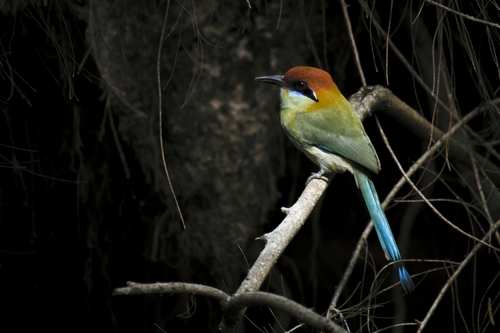
Russet-crowned Motmot
Momotus mexicanus
With its stunning cinnamon-colored cap and iconic 'pendulum' tail, the Russet-crowned Motmot is a true showstopper of the dry forest. This charismatic bird brings a touch of tropical elegance to shaded gardens across Mexico and Guatemala.
Quick Identification
Size
33–38 cm (13–15 in) in length; weighs approximately 70–110 g (2.5–3.9 oz)
Colors
Distinctive russet or cinnamon-colored crown and nape; olive-green back; pale greenish-buff underparts; black eye mask with a thin blue border; long green tail with black racquet tips.
Key Features
- Bright reddish-brown (russet) crown and nape
- Long tail with two central feathers ending in bare-shafted 'racquets'
- Black 'mask' extending through the eye
- Heavy, slightly serrated bill
When You’ll See Them
Behavior
The Russet-crowned Motmot is a patient, 'sit-and-wait' predator. It spends much of its day perched motionlessly on shaded branches, scanning the ground or air for movement. One of its most captivating behaviors is the 'pendulum' tail wag; when it detects a potential threat or feels agitated, it swings its long tail back and forth with mechanical precision. This is widely believed to be a signal to predators that the bird is alert and aware of their presence.
While they can be quite bold around human dwellings, they are more often heard than seen. Their call is a low, hollow, double-noted 'whoop-whoop' that resonates through the dry forests during the early morning. They are solitary or found in pairs, often returning to the same favorite perching spots day after day, making them excellent subjects for consistent observation if you can locate their preferred 'sentinel' branch.
EverydayEarth exclusive
Camera Tips
To successfully capture a Russet-crowned Motmot on camera, you must focus on their perching habits. These birds rarely spend time on the ground unless they are striking at prey. Position your camera 5 to 8 feet off the ground, aiming at a horizontal, unobstructed branch that sits in the shade. Motmots avoid direct, harsh sunlight and prefer the dappled light of the mid-canopy. If you see bird droppings or insect remains below a specific branch, that is your primary target for camera placement.
Because motmots are famous for their 'pendulum' tail movement, using Video Mode is highly recommended over still photos. A 10-20 second clip triggered by motion will capture the rhythmic tail wagging that a single photo misses. Set your camera's trigger speed to its fastest setting; while the bird sits still for long periods, its strike—when it dives to the ground to grab a lizard or insect—is lightning fast. High-definition video will also help you see the unique 'racquet' feathers, which are formed when the bird preens away the weak barbs of its central tail feathers.
Water is a significant draw for this species, especially in the dry tropical environments they call home. An elevated birdbath or a dripping water feature placed in a quiet, shaded corner of your yard is the best way to lure them into frame. Unlike smaller songbirds that flit away instantly, a motmot may stay at a water source for several minutes, providing ample time for high-quality recording. During the spring, keep an eye out for holes in vertical earthen banks; they nest in long burrows, and a camera placed at a respectful distance from a nest entrance can capture incredible footage of adults carrying food to their chicks.
Similar Species
Species that look similar or are commonly confused with Russet-crowned Motmot.
Frequently Asked Questions
Record Russet-crowned Motmot at your habitat
Connect a camera to start building your own species record — AI identifies every visitor automatically.