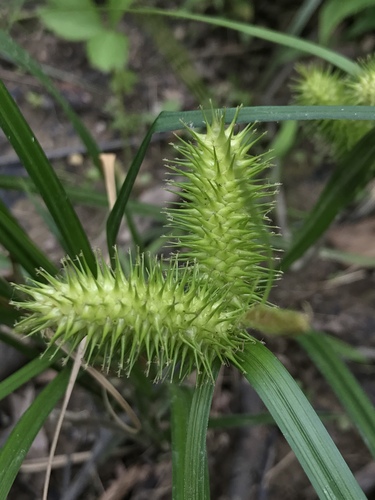
sallow sedge
Carex lurida
The sallow sedge is a vibrant, lime-green powerhouse of the wetland world, recognized by its distinctive 'bottle-brush' seed heads. A must-have for any backyard water feature, it provides essential shelter for frogs and insects while adding a striking architectural texture to your landscape.
Quick Identification
Size
1.5 to 3 feet (45–90 cm) tall with a similar spread
Colors
Bright lime-green leaves; seed heads transition from pale green to a straw-like yellow or sallow tan as they mature
Key Features
- Densely bristly, bottle-brush shaped seed spikes
- Clumping, tussock-forming growth habit
- V-shaped leaf blades up to 12 inches long
- Stems are triangular in cross-section (sedges have edges)
When You’ll See Them
Behavior
Sallow sedge is a perennial wetland plant that grows in distinct clumps known as tussocks. Unlike many invasive grasses, it stays relatively contained in its footprint, making it a well-behaved addition to a backyard pond or rain garden. It is wind-pollinated, meaning it doesn't rely on flashy flowers to attract insects, but it provides essential structural habitat for various small creatures.
Ecologically, this sedge acts as a 'nursery' in the wild. Its thick, overlapping leaves provide excellent cover for larval stages of various insects and small amphibians. During the winter, the dried foliage often collapses over the center of the clump, creating a warm, insulated pocket for overwintering beneficial insects and even small mammals like meadow voles.
EverydayEarth exclusive
Camera Tips
Capturing the sallow sedge with an AI-powered trail camera requires a different approach than filming moving animals. To get the best results, place your camera on a low tripod or a ground stake approximately 12 to 18 inches above the soil. Aim the lens toward the seed heads (perigynia) to capture their intricate, spiky texture. Because plants move with the wind, you may want to adjust your AI sensitivity settings to avoid 'false triggers'—or better yet, use a dedicated time-lapse mode to document the sedge's growth from spring shoots to summer seed spikes.
Lighting is your best friend when it comes to sedges. Position the camera so it faces the west or east to catch the low-angle 'golden hour' light, which makes the lime-green translucent seeds appear to glow. If your camera is near a water feature, try to capture the reflection of the sedge in the water for a professional-grade wildlife shot. This species is particularly photogenic after a rainstorm when water droplets cling to its bristly heads.
The real secret to great sedge photography isn't just the plant itself, but the visitors it attracts. Sallow sedge is a favorite perching spot for dragonflies and damselflies. Set your camera's 'trigger speed' to its fastest setting and focus on a specific seed head that stands taller than the others. This is often the preferred 'lookout post' for predatory insects. By focusing on the plant, you are essentially setting a stage for the high-speed drama of the insect world.
During the winter months, don't pack the camera away. Sallow sedge retains its structure even when brown and covered in frost. The contrast of the sharp, spiky seed heads against a backdrop of white snow provides a striking architectural look. Use a high-resolution photo mode rather than video during the winter to capture the delicate ice crystals that form on the bristles of the seed heads.
Similar Species
Species that look similar or are commonly confused with sallow sedge.
Frequently Asked Questions
Record sallow sedge at your habitat
Connect a camera to start building your own species record — AI identifies every visitor automatically.