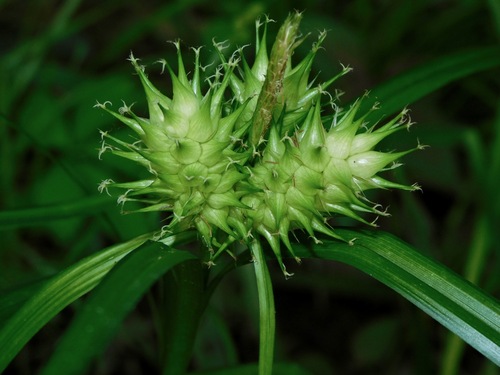
hop sedge
Carex lupulina
The hop sedge is a structural masterpiece of the wetlands, easily recognized by its spiked, hop-like seed clusters. This moisture-loving perennial is an essential habitat builder for backyards with soggy soil or pond edges.
Quick Identification
Size
30 to 100 cm (1 to 3.3 ft) in height; leaves are 5 to 15 mm wide
Colors
Bright emerald green during spring and summer; matures to a golden-straw or tan color in autumn
Key Features
- Large, inflated, hop-like seed clusters (perigynia)
- Distinctly triangular stems typical of the sedge family
- Long, M-shaped leaf blades in cross-section
- Compact, bristly flower spikes that persist into winter
When You’ll See Them
Behavior
Hop sedge is a robust, clump-forming perennial that defines the character of wet, low-lying areas. Unlike grasses, which have round stems, this sedge is easily identified by its sharp, three-sided stems. It spends the early spring pushing up lush, broad leaves that provide dense cover for ground-nesting creatures. As the season progresses into mid-summer, it produces its iconic seed heads, which look remarkably like the hops used in brewing—hence the name.
Ecologically, hop sedge acts as a natural water filter and soil stabilizer in soggy backyard spots. It doesn't 'move' in the traditional sense, but its growth pattern is aggressive enough to form small colonies over several years. It is a favorite haunt for various insects and small amphibians, providing a humid microclimate near the base of its thick foliage where they can hide from predators and the midday sun.
EverydayEarth exclusive
Camera Tips
While hop sedge doesn't run or fly, it is a fantastic 'anchor' species for your backyard camera setup. Because it grows in wet areas, it is a natural magnet for interesting wildlife like Wood Ducks, Rails, and various frogs. Position your AI-powered camera on a short stake about 12-18 inches off the ground, angled slightly downward toward a clump of sedge near the water's edge. This low angle allows you to capture the small mammals and amphibians that use the plant for cover.
For those interested in botanical transitions, use the time-lapse feature on your camera to document the development of the seed heads from June through August. The 'AI' in your camera can be trained to ignore the swaying of the leaves in the wind while remaining alert for the movement of seed-eating birds like Sparrows or Finches that frequently visit the spikes in late summer. Ensure your camera is set to a high sensitivity for motion, as the small birds visiting the sedge move quickly.
Placement is key: look for where the hop sedge meets open water or a trail. This 'edge' habitat is a highway for wildlife. If you are using a trail camera with a macro or close-up lens capability, focus on the seed heads themselves to capture the specialized insects, such as sedge grasshoppers, that reside almost exclusively on these plants. During the winter, keep the camera active; the dried stalks remain standing and serve as a vital food source for wintering birds when snow covers the ground.
Similar Species
Species that look similar or are commonly confused with hop sedge.
Frequently Asked Questions
Record hop sedge at your habitat
Connect a camera to start building your own species record — AI identifies every visitor automatically.