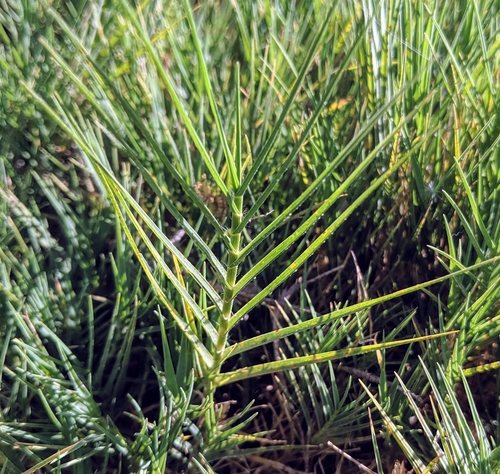
Saltgrass
Distichlis spicata
The glittering survivor of the marshlands, Saltgrass turns toxic soil into a shimmering green sanctuary. Its ability to 'breathe' salt makes it one of the most resilient and fascinating plants to document in your coastal or desert backyard.
Quick Identification
Size
10-60 cm (4-24 inches) in height; can form expansive mats several meters wide via underground rhizomes.
Colors
Grayish-green to dull emerald foliage; turns a golden straw-color in winter; flowering spikes are yellowish to tan.
Key Features
- Two-ranked (distichous) leaves growing in a flat plane
- Visible white salt crystals excreted on leaf surfaces
- Stiff, sharp-pointed leaf blades
- Creeping growth habit forming dense sod
- Dioecious structure with male and female flowers on different plants
When You’ll See Them
Behavior
In terms of social ecology, Saltgrass is a 'pioneer species.' It is often the first plant to colonize harsh, alkaline flats or coastal areas where the soil is too toxic for other vegetation. By spreading through a deep, interconnected network of scaly rhizomes, it stabilizes the ground, prevents erosion, and creates a micro-habitat for specialized insects and small coastal birds. It does not 'compete' in the traditional sense; rather, it dominates environments where the conditions are too brutal for others.
EverydayEarth exclusive
Camera Tips
To capture the best images of Saltgrass, you need to think like a macro photographer. Because the plant is low-growing, mount your camera on a ground-level stake or a 'pancake' tripod only a few inches off the dirt. Aim for a side-on angle rather than top-down; this allows the camera to catch the distinct 'two-ranked' architecture of the leaves, which grow in two neat rows on opposite sides of the stem. If your camera has a macro mode, use it to zoom in on the leaf surfaces during high noon—this is when the excreted salt crystals are most visible and reflective, creating a stunning 'glitter' effect on video.
Time-lapse is the secret weapon for documenting Saltgrass. Set your camera to take a frame every 30 minutes over a period of 48 hours. This captures the 'tidal dance' in coastal areas or the dramatic curling and uncurling of leaves in response to heat and moisture levels in desert environments. Because Saltgrass is often a hub for small life, try placing a white card or board behind a small patch of the grass to create a high-contrast background. This will make it much easier for your AI camera to trigger when a Saltmarsh Skipper butterfly or a small crab moves through the stalks.
Be mindful of the environment when placing your gear. Saltgrass grows in high-salinity areas which can be incredibly corrosive to trail camera electronics and battery contacts. Always use a weather-sealed housing and consider applying a thin layer of dielectric grease to any exposed metal ports. If you are filming in a coastal marsh, check the tide tables before placement! You want your camera low enough to see the grass but high enough to avoid a saltwater soak during a king tide. A lens hood is also recommended to prevent the harsh glare from the salt-crusted ground from washing out your colors.
Similar Species
Species that look similar or are commonly confused with Saltgrass.
Frequently Asked Questions
Record Saltgrass at your habitat
Connect a camera to start building your own species record — AI identifies every visitor automatically.