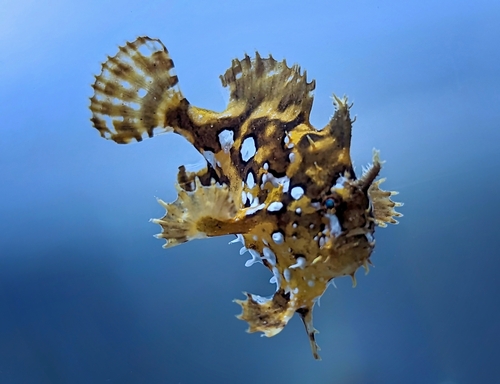
Sargassumfish
Histrio histrio
Meet the ultimate actor of the ocean, a fish that looks more like a plant than an animal. The Sargassumfish spends its life drifting across the globe, 'walking' through floating seaweed forests with hand-like fins and a hidden fishing lure.
Quick Identification
Size
Typically 5–10 cm (2–4 inches), but can reach up to 20 cm (7.9 inches) in length.
Colors
Mottled patterns of yellow, tan, and dark brown that perfectly mimic the appearance of Sargassum seaweed; skin is covered in leafy appendages.
Key Features
- Fleshy, weed-like skin appendages for camouflage
- Prehensile pectoral fins used for 'climbing' through seaweed
- Modified dorsal spine with a fleshy lure (esca) for fishing
- Large, upward-facing mouth designed for suction feeding
When You’ll See Them
Geographic range
Where Does the Sargassumfish Live?
This remarkable fish is a cosmopolitan traveler found across the globe's warm waters. It is native to the tropical and subtropical regions of the Atlantic, Indian, and Pacific Oceans, following the currents where its seaweed home drifts. While it is a common sight in the Sargasso Sea and the Gulf of Mexico, it can also be found as far north as the coast of Maine or as far south as New Zealand during warm summer months when currents carry the Sargassum mats into temperate zones.
Basemap © OpenStreetMap contributors
Behavior
Their feeding strategy is a classic example of sit-and-wait ambush. Using a modified dorsal spine as a fishing rod (illicium) and a fleshy lure (esca), they twitch a 'bait' to attract smaller fish and crustaceans. When the prey moves within range, the Sargassumfish expands its oral cavity with incredible speed, creating a vacuum that sucks the victim into its stomach in a matter of milliseconds. They are capable of swallowing prey nearly as large as themselves due to their distensible stomachs.
Interactions with humans are rare and usually happen by chance. They are frequently found washed up on beaches after strong storms or hurricanes, still clinging tightly to their seaweed homes. Because they are poor swimmers in open water, they rely entirely on their camouflage for defense, often remaining perfectly still and refusing to leave their seaweed clump even when it is lifted out of the water.
EverydayEarth exclusive
Camera Tips
Since the seaweed is constantly moving with the current, stability is your biggest challenge. Mount your camera to a weighted frame or a stabilized floating platform that moves with the weed mat to ensure your subject stays in the frame. If you are setting up a stationary dock camera, wait for a day with a gentle onshore breeze that pushes large mats of seaweed against the pilings. This 'traps' the ecosystem in place, allowing you to get clear, close-up shots of the fish as they hunt among the stationary vines.
Lighting is crucial for bringing out the intricate details of their weed-like skin. On bright, sunny days, the natural light penetrating the top layer of seaweed provides excellent visibility. However, if the seaweed mat is thick, use a small, diffused underwater LED light to fill in the shadows. This will help your AI-powered camera recognize the silhouette of the fish against the complex background. Avoid using strong, direct flashes which can bleach out the subtle yellows and browns of their camouflage.
Finally, patience is key. The Sargassumfish may stay motionless for hours. To trigger activity, look for cameras with 'pre-roll' or 'looping' features that save footage from just before a movement occurs. If you want to attract them to your camera's field of view, you don't need bait—you need habitat. Ensuring your camera is positioned near a dense, healthy clump of Sargassum with plenty of small shrimp or glass minnows nearby will naturally bring this predator into view as it follows its food source.
Similar Species
Species that look similar or are commonly confused with Sargassumfish.
Frequently Asked Questions
Record Sargassumfish at your habitat
Connect a camera to start building your own species record — AI identifies every visitor automatically.