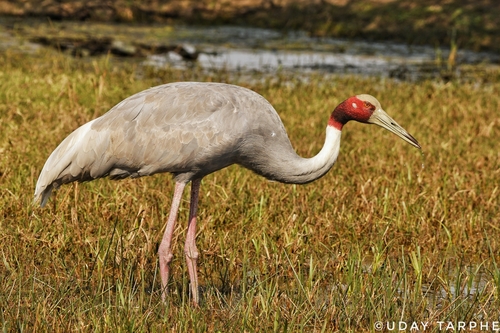
Sarus Crane
Antigone antigone
The Sarus Crane is a towering icon of the wetlands, standing nearly six feet tall with a striking red crown that demands attention. Famous for their lifelong partnerships and elegant courtship dances, these majestic birds are the ultimate prize for any backyard wildlife observer.
Quick Identification
Size
Height: 150–180 cm (4.9–5.9 ft); Wingspan: 220–250 cm (7.2–8.2 ft); Weight: 5–12 kg (11–26 lbs)
Colors
Overall light grey plumage with a distinctive naked red head and upper neck. They feature a pale grey crown and long, bubblegum-pink to reddish legs.
Key Features
- Tallest flying bird in the world
- Bright red naked skin on the head and upper neck
- Long, pale pinkish-red legs
- Ash-grey body with dark primary wing feathers
When You’ll See Them
Behavior
Sarus Cranes are famous for their incredibly strong pair bonds, often believed to mate for life. Their social life is centered around these pairs, though they may gather in larger flocks during the non-breeding season, especially around receding water bodies. They are well-known for their spectacular courtship displays, which involve both birds synchronously trumpeting while leaping, bowing, and tossing nesting material into the air.
Unlike many other crane species, Sarus Cranes are relatively sedentary and do not perform long-distance migrations. In many regions, particularly in India, they have developed a unique relationship with humans, often nesting in agricultural fields and showing little fear of farmers. Despite their size, they are graceful foragers, moving slowly through shallow water or grasslands to pick up food items with their powerful bills.
EverydayEarth exclusive
Camera Tips
Capturing the world's tallest flying bird requires a different strategy than your average backyard visitor. Because a Sarus Crane stands nearly six feet tall, a camera mounted at the standard 'critter' height (1-2 feet) will likely only capture their legs. For the best results, mount your camera at chest height (about 4 feet) and angle it slightly upward, or better yet, place the camera at a significant distance—at least 20 to 30 feet—from their expected path to ensure the entire bird fits in the frame.
Focus your efforts on 'transition zones' where wetlands meet agricultural fields or open grasslands. Sarus Cranes are creatures of habit and will often use the same paths to enter a field each morning. Look for their distinctively large, three-toed tracks in the mud. If you are setting up near a pond or marsh, look for the shallowest edges; they prefer water that is only a few inches deep where they can easily see submerged tubers or insects.
Because these birds are famous for their 'dancing' and synchronized calling, use a camera with a fast trigger speed and a high-quality video mode. Set your video length to at least 20-30 seconds to capture the full sequence of a trumpet call, which involves a specific posturing where they throw their heads back. Since they are most active during the 'golden hours' of dawn and dusk, a camera with good low-light performance is essential to avoid grainy footage during their most vocal periods.
Avoid using artificial lures or bait. Instead, time your camera placement with local agricultural cycles. In many areas, they are highly attracted to freshly harvested or newly sown grain fields. If you have a permanent water source on your property during the dry season, this is the single best place for a camera, as these large birds require frequent hydration and will return to the same watering hole daily.
Similar Species
Species that look similar or are commonly confused with Sarus Crane.
Brolga
The Brolga has dark grey/black legs and less red skin on the neck compared to the Sarus Crane's pink legs and extensive red coloring.
Common Crane
Much smaller than the Sarus, with a black-and-white neck pattern rather than the solid red skin of the Sarus.
Black-necked Crane
Identifiable by its distinct black neck and head with a small red crown patch, whereas the Sarus has a grey body and mostly red head/upper neck.
Frequently Asked Questions
Record Sarus Crane at your habitat
Connect a camera to start building your own species record — AI identifies every visitor automatically.