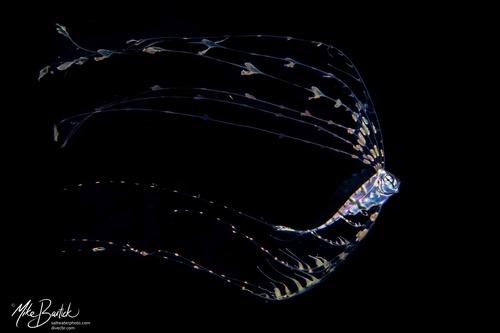
Scalloped Ribbonfish
Zu cristatus
A shimmering specter of the deep, the Scalloped Ribbonfish is one of the ocean's most enigmatic residents, known for its mirror-like skin and strange, vertical swimming style.
Quick Identification
Size
Up to 118 cm (46.5 inches) in length; adults weigh approximately 4,000g (8.8 lbs).
Colors
Mirror-like silver or chrome body; juveniles feature spectacular elongated reddish-orange dorsal and pelvic fin rays and dark vertical bands that fade with age.
Key Features
- Distinctive 'scalloped' or stepped profile along the lower belly
- Elongated, ribbon-like body that tapers toward the tail
- Large, telescopic eyes adapted for low-light deep-sea environments
- Upward-angled mouth for striking at prey from below
When You’ll See Them
Geographic range
Where Does the Scalloped Ribbonfish Live?
The Scalloped Ribbonfish is a circumglobal species, meaning it is found in tropical and warm-temperate waters across all the world's oceans. It is most frequently recorded in the Mediterranean Sea, but its range extends through the Atlantic from Florida and the Gulf of Mexico down to the coast of Brazil. In the Indo-Pacific, they are found from South Africa up to Japan and across to the eastern Pacific near the California coast and New Zealand. While they occupy a massive geographic footprint, they are considered rare throughout their range due to their preference for the deep open sea.
Basemap © OpenStreetMap contributors
Behavior
The Scalloped Ribbonfish is a master of vertical movement in the open ocean. Unlike many fish that swim horizontally, ribbonfish are often observed hanging vertically in the water column, a behavior known as 'head-up' positioning. This allows them to blend in with downwelling light and ambush prey swimming above them. They are generally solitary creatures, drifting with oceanic currents rather than fighting against them, making them part of the 'macro-plankton' community in their younger stages.
As they mature, Scalloped Ribbonfish undergo a significant ontogenetic shift in habitat. Juveniles are more frequently sighted by divers and cameras because they inhabit the epipelagic zone (shallower waters), often mimicking the movements of jellyfish to avoid predators. As they grow into adults, they migrate much deeper into the mesopelagic 'twilight zone,' reaching depths where sunlight barely penetrates. They are rarely encountered by humans except when they are accidentally caught in deep-sea trawls or occasionally wash ashore after storms.
EverydayEarth exclusive
Camera Tips
Capturing a Scalloped Ribbonfish on camera is an elite challenge for any wildlife enthusiast. Because these are deep-sea fish, a standard backyard camera won't work unless you live on a deep-water pier or a vessel. For those with waterfront access to deep channels, particularly in the Mediterranean or the Gulf of Mexico, using a specialized underwater 'drop camera' with high-intensity LED lights is the best approach. Deploy the camera at night, as juveniles and even some adults may migrate toward the surface under the cover of darkness.
Placement is key; aim for areas where current breaks occur near steep continental shelves or deep-water piers. Use a 'baited remote underwater video' (BRUV) setup. While ribbonfish are visual hunters, a mesh bag of crushed squid or oily fish can attract the smaller fish and squid that the Scalloped Ribbonfish preys upon, bringing the ribbonfish into your camera's field of view. Ensure your camera is set to a high frame rate (60fps) to capture their fluid, undulating fin movements.
Since their silver bodies are highly reflective, position your lights at a 45-degree angle away from the camera lens to avoid 'backscatter' and 'hot spots' on the fish's metallic skin. If you are monitoring a coastal area after a significant storm or upwelling event, keep your shore-based cameras ready; these fish are occasionally pushed into shallow bays where they can be filmed in just a few feet of water before they retreat back to the depths.
Similar Species
Species that look similar or are commonly confused with Scalloped Ribbonfish.
Frequently Asked Questions
Record Scalloped Ribbonfish at your habitat
Connect a camera to start building your own species record — AI identifies every visitor automatically.