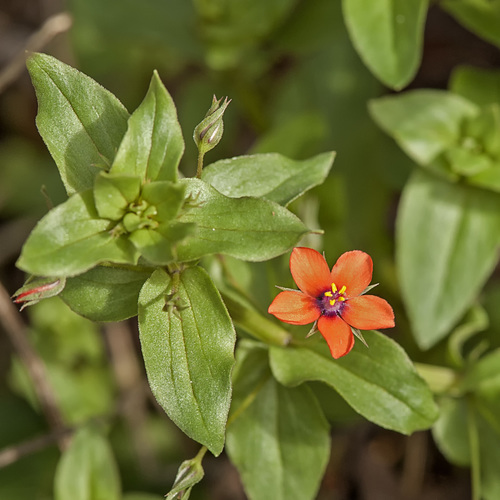
scarlet pimpernel
Lysimachia arvensis
Often called the 'Poor Man's Weather-Glass,' this tiny scarlet wildflower is nature's own barometer. Watch as its brilliant petals snap shut at the first sign of rain, protecting its precious pollen from the elements.
Quick Identification
Size
Low-growing/prostrate; 5-30 cm (2-12 inches) in height with a spread up to 40 cm (16 inches)
Colors
Vibrant scarlet-red or orange-red petals with a distinct dark purple or pinkish-red eye at the center
Key Features
- Five-petaled flowers approx. 10mm wide
- Square-shaped stems (quadrangular)
- Opposite, stalkless (sessile) oval leaves
- Flowers that close tightly in cloudy weather or late afternoon
When You’ll See Them
Behavior
As an annual plant, it completes its entire life cycle in a single season. It relies on its low-profile growth habit to survive in areas that are frequently mowed or stepped on. While it appears delicate, it is a resilient colonizer of disturbed soils and can produce hundreds of seeds that remain viable in the ground for many years.
EverydayEarth exclusive
Camera Tips
Capturing the scarlet pimpernel requires a dedicated macro approach because of its diminutive size. To get professional-looking shots, mount your camera or smartphone on a ultra-low tripod or a 'ground pod' just a few inches from the soil. Use a wide aperture (low f-stop) to blur the background, making the brilliant red petals pop against the green foliage. Because the plant is so low to the ground, shooting from a side-angle rather than looking straight down creates a much more engaging, intimate perspective.
This species is the ultimate subject for time-lapse photography. Set your camera to take one photo every 2 to 5 minutes over a 6-hour period starting at sunrise. This will beautifully document the 'waking up' process as the petals unfurl in response to the light. If you have an AI-powered camera with a sensor, be aware that the plant's movement is too slow to trigger motion alerts; use a 'Scheduled Capture' or 'Time-Lapse' mode instead to ensure consistent footage.
Lighting is your biggest challenge and your best friend with this plant. The scarlet pigment is very 'hot' for digital sensors and can easily lose detail in direct, harsh midday sun. Aim to film or photograph during the mid-morning when the flowers have just opened but the light is still soft. If you are shooting in high sun, use a small white umbrella or a piece of parchment paper to shade the flower, which will bring out the hidden purple details in the center of the bloom.
For those using backyard trail cameras to monitor 'micro-habitats,' place the camera in a spot that receives at least 6 hours of direct sun. Clear away any tall blades of grass that might blow in front of the lens, as these will cause false triggers and obscure the view. Since pimpernels often grow in patches, try to frame a group of 3-4 flowers to increase the chances of capturing insect pollinators like hoverflies or small bees visiting the blooms.
Similar Species
Species that look similar or are commonly confused with scarlet pimpernel.
Frequently Asked Questions
Record scarlet pimpernel at your habitat
Connect a camera to start building your own species record — AI identifies every visitor automatically.