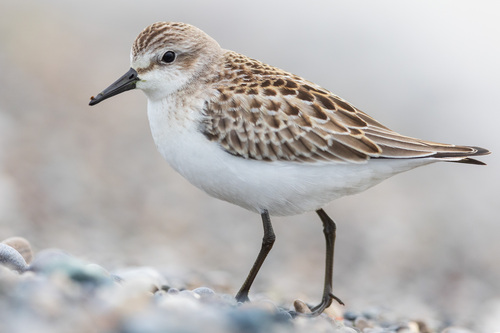
Semipalmated Sandpiper
Calidris pusilla
Witness the frantic energy of one of nature's greatest travelers. The Semipalmated Sandpiper may be small, but its marathon migrations and synchronized flocking behavior make it a backyard wetland superstar.
Quick Identification
Size
Length: 13–15 cm (5.1–5.9 in); Wingspan: 29–30 cm (11.4–11.8 in); Weight: 20–32 g (0.7–1.1 oz)
Colors
Mottled gray-brown upperparts and white underparts; black legs and a short, stout black bill; subtle rufous edges on feathers during breeding season.
Key Features
- Short, straight black bill with a slightly tubular tip
- Black legs and feet with distinct partial webbing between toes
- Tiny 'peep' body size roughly the length of a smartphone
- Fast, sewing-machine-like probing motion while feeding
When You’ll See Them
Behavior
Semipalmated Sandpipers are high-energy foragers known for their incredible migratory journeys. During the spring and fall, they congregate in massive flocks that can number in the thousands, moving in stunningly synchronized aerial displays. On the ground, they are constantly in motion, using a rapid probing technique often described as a 'sewing machine' motion to find food in the mud.
These birds are surprisingly social and rarely seen alone. While they aren't 'tame' around humans, they are often so focused on fueling up for their long-distance flights that they may allow a quiet observer to get relatively close. They communicate with high-pitched 'cheep' calls that create a constant chatter across the mudflats.
EverydayEarth exclusive
Camera Tips
To capture these tiny shorebirds, camera placement is everything. You need to get your camera as low as possible—ideally mounted just 2 to 5 inches off the ground using a specialized low-profile stake or a weighted 'ground pod.' Because these birds are so small, a standard tripod height will result in a 'looking down' angle that loses the detail of their face and the partial webbing on their feet. Aim for a spot where the mud is damp but not submerged, as this is where they spend the most time probing for food.
Since Semipalmated Sandpipers move with lightning speed, use your camera’s 'Burst Mode' or high-speed trigger settings. A slow trigger will likely result in a series of photos of empty mud or blurred tails. If your AI camera allows for 'Subject Detection,' ensure it is set to birds, but be aware that their rapid head movements may challenge even the best autofocus systems. Using a higher shutter speed (at least 1/1000s if manual settings are available) is essential for freezing their frantic foraging action.
The best time to set your camera is during a rising tide if you are on the coast. As the water moves in, it pushes the birds closer to the dry land where your camera is stationed. If you are monitoring an inland backyard wetland or pond edge, focus your lens on 'pinch points'—narrow strips of mud between water and vegetation. Don't bother with birdseed; instead, ensure the mud remains soft and wet, which naturally attracts the invertebrates they crave.
Lastly, consider the lighting. Because these birds have white bellies and dark backs, midday sun can create harsh shadows and 'blown out' highlights. Position your camera so the sun is behind it during the early morning or late afternoon. This front-lighting will illuminate the subtle feather patterns and the dark legs that are key for identifying this species against its similar cousins.
Similar Species
Species that look similar or are commonly confused with Semipalmated Sandpiper.
Frequently Asked Questions
Record Semipalmated Sandpiper at your habitat
Connect a camera to start building your own species record — AI identifies every visitor automatically.