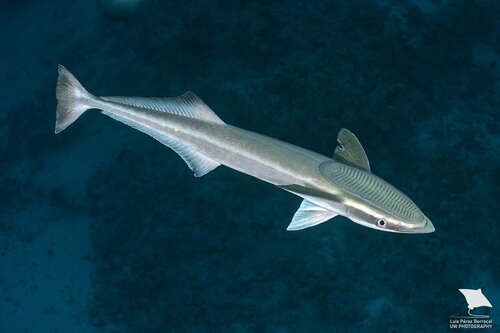
Sharksucker
Echeneis naucrates
Meet the ocean's ultimate hitchhiker, a master of attachment that turns the world's largest predators into a personal transit system. With a specialized suction disc and a bold personality, the Sharksucker is a marvel of evolutionary engineering.
Quick Identification
Size
Typically 60 to 90 cm (24 to 35 inches) in length, though they can reach up to 110 cm (43 inches); weight usually ranges from 1 to 2.5 kg (2.2 to 5.5 lbs).
Colors
Dark grey to blackish body with a prominent dark longitudinal stripe running from the snout to the tail, bordered by narrower white stripes on both sides; belly is typically darker than the back.
Key Features
- Oval-shaped sucking disc on the top of the head
- Slender, elongated body shape
- Lower jaw projects significantly further than the upper jaw
- Dark horizontal body stripe with white borders
When You’ll See Them
Behavior
The Sharksucker is the ocean's most famous opportunist. Using a highly specialized dorsal fin that has evolved into a powerful suction disc, it attaches itself to larger marine animals like sharks, rays, sea turtles, and even whales. This relationship is often mutualistic; the Sharksucker gets a free ride and protection from predators, while the host benefits from the removal of external parasites and dead skin.
When not hitched to a host, these fish are surprisingly capable swimmers. They are socially fluid, often found in pairs or small groups attached to the same host. While they are generally harmless to humans, they are known for their bold and curious nature; divers often find Sharksuckers attempting to attach to their fins or wetsuits, mistaking them for a large marine animal.
EverydayEarth exclusive
Camera Tips
Capturing a Sharksucker on an AI camera requires an underwater setup, such as a specialized marine housing for your trail cam or a waterproof action camera. For those with 'backyard' access to a dock or pier, mount your camera 3 to 5 feet below the low-tide line, angling it slightly upward toward the surface. This 'bottom-up' perspective is ideal for capturing the unique silhouette of the suction disc as the fish swims overhead.
To attract Sharksuckers without a host present, use a weighted bait cage filled with oily fish like sardines or crushed crabs. Sharksuckers have a keen sense of smell and will often detach from a host to investigate a concentrated food source. Secure the bait cage to a pier piling or a heavy anchor to keep the camera frame stable against the current and prevent the bait from being carried away by larger scavengers.
Visibility is your biggest hurdle underwater. Set your camera near sandy-bottom areas where natural sunlight can reflect upward, which helps illuminate the dark underside of the fish. If your camera supports it, use a high frame rate (60fps or higher) because despite their lazy appearance, Sharksuckers can dart with incredible speed when they decide to strike at bait or transition between hosts.
Check your camera's trigger sensitivity. Because Sharksuckers are slender and can blend into the shadows of a pier or a host's belly, standard motion sensors might miss them. Use a 'time-lapse' mode combined with motion detection to ensure you don't miss the moments they are hovering near your bait station.
Similar Species
Species that look similar or are commonly confused with Sharksucker.
Frequently Asked Questions
Record Sharksucker at your habitat
Connect a camera to start building your own species record — AI identifies every visitor automatically.