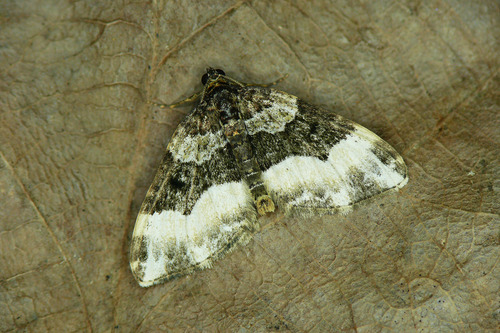
Sharp-angled Carpet
Euphyia unangulata
A masterpiece of geometric camouflage, the Sharp-angled Carpet is a frequent but often overlooked visitor to damp summer gardens. Its intricate wing patterns provide a stunning glimpse into the hidden world of nocturnal pollinators.
Quick Identification
Size
Wingspan of 24-28 mm (approximately 0.9 to 1.1 inches)
Colors
Creamy white base with a broad, dark brown or charcoal-grey central band; subtle black spotting along the wing margins
Key Features
- Distinctive sharp, tooth-like projection on the outer edge of the dark band
- Small black discal spot located within the central band
- Resting posture with wings spread flat against the surface
- Two wavy white lines running parallel to the outer wing edge
When You’ll See Them
Behavior
The Sharp-angled Carpet is a master of nighttime camouflage, known for its intricate wing patterns that resemble a fine tapestry. During the daylight hours, these moths remain perfectly still, pressed flat against tree trunks, fence posts, or the undersides of leaves. If disturbed, they take flight in a quick, erratic zigzag pattern before diving back into deep vegetation to hide. They are solitary creatures, generally only interacting with others of their species during the mid-summer mating season.
As a nocturnal species, they emerge at dusk to feed and find mates. They are particularly sensitive to environmental changes and are often used by naturalists as indicators of healthy, damp ecosystems. Unlike some bolder moth species, the Sharp-angled Carpet is somewhat shy and tends to stay close to the low-growing host plants where it spent its life as a caterpillar. They do not pose any threat to humans or garden crops, as their larvae focus almost exclusively on wild weeds.
EverydayEarth exclusive
Camera Tips
To capture the Sharp-angled Carpet on camera, you need to leverage their natural attraction to light. Setting up a white sheet with a UV or actinic light bulb behind it is the most effective 'stage' for your camera. Position your AI camera on a tripod roughly 12 to 18 inches away from the sheet, ensuring the lens is parallel to the surface to keep the entire moth in the depth of field. Because these moths are small, using a macro lens or a camera with a close-focusing distance is essential for seeing the 'sharp angle' that gives them their name.
Placement is key; choose a sheltered spot in your garden near damp soil or a patch of chickweed. Avoid windy nights, as these delicate fliers will stay grounded in heavy gusts. The best footage is often captured on warm, humid nights when the air feels heavy—these conditions trigger maximum moth activity. If your camera has a 'white light' flash option, use it sparingly or diffuse it with a piece of parchment paper to avoid blowing out the white details on the moth's wings; otherwise, high-quality infrared will still reveal the distinctive banding patterns.
For those looking for a more natural shot without a light trap, focus your camera on nectar sources like Valerian, Buddleia, or even overripe fruit fermented with a bit of sugar and beer (a technique known as 'mothing'). Mount the camera low to the ground, about 1 to 2 feet high, as this species often stays near the herb layer. Set your trigger sensitivity to high, as their flight is fast and they may only land for a few seconds to sip nectar before moving on to the next flower.
Similar Species
Species that look similar or are commonly confused with Sharp-angled Carpet.
Frequently Asked Questions
Record Sharp-angled Carpet at your habitat
Connect a camera to start building your own species record — AI identifies every visitor automatically.