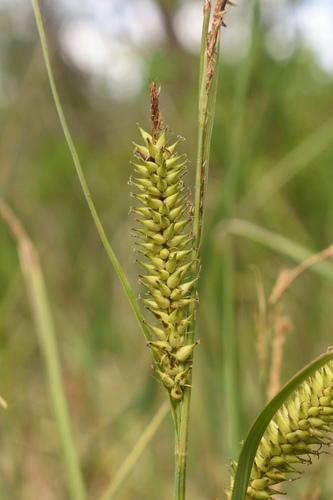
Shoreline Sedge
Carex hyalinolepis
A champion of the wetlands, Shoreline Sedge forms lush, bluish-green carpets that transform simple shorelines into thriving wildlife sanctuaries. Its translucent-edged seed heads and resilient nature make it a fascinating subject for any backyard observer.
Quick Identification
Size
Stems reach 30–120 cm (1–4 ft) in height; leaves are 5–15 mm wide and can exceed 60 cm (2 ft) in length.
Colors
Pale bluish-green to glaucous foliage; flowering spikes are tan to reddish-brown with translucent (hyaline) scale margins.
Key Features
- Distinctive bluish-green (glaucous) leaves
- Triangular stems with sharp edges
- Floral scales with transparent or whitish margins
- Extensive colony-forming growth habit
When You’ll See Them
Behavior
During the growing season, the plant focuses its energy on vertical growth and horizontal expansion. It is a resilient survivor, capable of withstanding both significant flooding and temporary dry spells, though it reaches its full, lush potential in consistently saturated soils. In the wind, the heavy foliage creates a rhythmic, oceanic movement that is a signature sight of healthy shorelines.
While it doesn't move to hunt, it 'interacts' with the environment by filtering runoff and locking down soil with its complex root systems. For backyard observers, it serves as a reliable stage for animal activity, as its height and density offer protection for nesting birds and a high vantage point for predatory insects like dragonflies.
EverydayEarth exclusive
Camera Tips
Because this species is a favorite haunt for wildlife, aim your lens at a transition zone—where the dense sedge colony meets open water or a garden path. This is the 'highway' where you are most likely to catch footage of turtles, frogs, and wading birds moving in and out of the cover. Use a high-trigger sensitivity setting to capture the smaller, faster movements of damselflies and dragonflies that frequently use the tall sedge leaves as perches.
One of our favorite techniques for sedges is using a time-lapse setting. If you set your camera to take a photo every hour during the spring (late April to June), you can document the incredible speed at which these plants emerge from the soil and unfurl their glaucous leaves. This creates a stunning visual narrative of the changing seasons in your backyard.
For the best lighting, position the camera so the sun rises or sets behind the plant. This 'backlighting' will illuminate the 'hyaline' (transparent) margins of the seed scales, making the fruiting heads appear to glow with a silver or white halo. If your camera allows for macro focus, try to get within 18 inches of a seed head to capture the intricate textures and colors that aren't visible from a distance.
Similar Species
Species that look similar or are commonly confused with Shoreline Sedge.
Frequently Asked Questions
Record Shoreline Sedge at your habitat
Connect a camera to start building your own species record — AI identifies every visitor automatically.