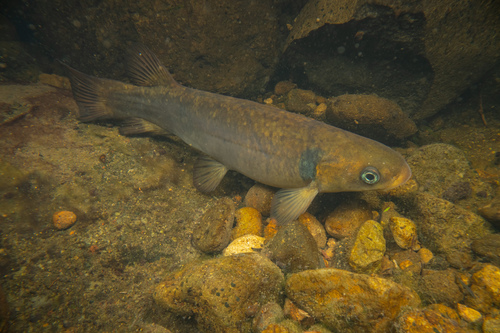
Shortjaw kokopu
Galaxias postvectis
Meet New Zealand's reclusive stream-climber. The Shortjaw kōkopu is a master of camouflage, thriving in the cool, boulder-strewn waters of native forests where it lives a secretive, nocturnal life.
Quick Identification
Size
Typically 150–200 mm (5.9–7.9 in) in length, with rare specimens reaching 350 mm (14 in).
Colors
Olive-brown to grey-brown with subtle dark mottling; often features a dark blue-black spot behind the gill cover.
Key Features
- Distinctively short 'undercut' lower jaw
- Large, fan-like pectoral fins set low on the body
- Scaleless, slippery skin with a thick mucus layer
- Sturdy, muscular build suitable for climbing waterfalls
- Large eyes positioned for low-light hunting
When You’ll See Them
Geographic range
Where Does the Shortjaw kokopu Live?
The Shortjaw kōkopu is a unique treasure found exclusively in the island nation of New Zealand. This endemic species maintains a widespread but fragmented distribution across the North and South Islands, as well as on Stewart and Chatham Islands. They are most commonly found in coastal catchments with high-quality native forest cover, where the cool, clear water provides the pristine environment they require to thrive throughout their adult lives.
Basemap © OpenStreetMap contributors
Behavior
Shortjaw kōkopu are the recluses of the New Zealand stream world. Primarily nocturnal, these fish spend their daylight hours tucked away in deep, shaded crevices between boulders or under submerged logs. They are highly territorial over their chosen pools and exhibit a 'sit-and-wait' predatory style, remaining perfectly still until prey drifts by on the current.
These fish are remarkable climbers, capable of scaling steep waterfalls as juveniles (whitebait) by using their fins and body surface tension to move up damp rock faces. While generally solitary, several individuals may inhabit the same stretch of water if the habitat offers enough cover. They are incredibly sensitive to human disturbance and will vanish into the shadows the moment they sense movement or vibration on the bank.
EverydayEarth exclusive
Camera Tips
Capturing the elusive Shortjaw kōkopu requires a specialized approach since they are almost exclusively nocturnal and live underwater. For the best results, use a waterproof action camera or a trail camera with a high-quality infrared (IR) flash. Position the camera on a stable tripod or weighted mount at the edge of a deep, bouldery pool where the water is relatively still. Focus your lens on 'slack water'—the calm spots behind large rocks or logs where the fish are likely to rest while waiting for food.
Because these fish are sensitive to light and vibration, avoid using standard white-light flashes, which will cause them to retreat. Set your camera to video mode or high-speed burst to capture their subtle movements. If you are using a bank-side trail camera, aim it at the water's surface on a calm night; you might catch the ripples of a kōkopu rising to snag a moth. Ensure the camera is as close to the water level as possible to reduce surface glare from the IR LEDs.
Timing is everything. Plan your 'camera trapping' for the warmer months (November to March) when insect activity is high and the fish are most active. If your camera setup allows, placing a small amount of fish-safe bait (like a mesh bag with crushed worms) in a nearby crevice can lure them out of their hiding spots for a clearer shot. Always check local regulations regarding baiting in native waterways to protect the delicate ecosystem and avoid introducing invasive species.
Similar Species
Species that look similar or are commonly confused with Shortjaw kokopu.
Frequently Asked Questions
Record Shortjaw kokopu at your habitat
Connect a camera to start building your own species record — AI identifies every visitor automatically.