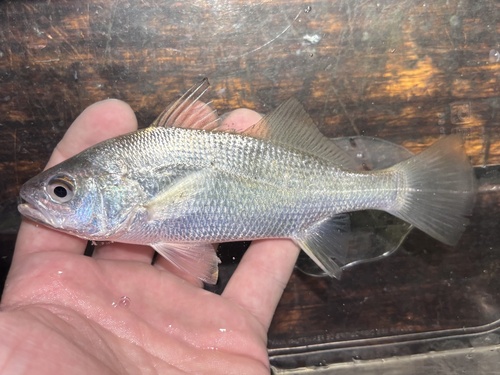
Silver Perch
Bairdiella chrysoura
The Silver Perch is the shimmering 'gold-tailed' gem of the Atlantic coast, known for its nightly drumming concerts and its role as a cornerstone of the coastal food web.
Quick Identification
Size
Commonly 15–20 cm (6–8 in); maximum length up to 30 cm (12 in). Weight is typically less than 0.5 kg (1 lb).
Colors
Bright silvery body with a bluish or greenish tint on the back; fins are notably tinged with yellow or gold, especially the caudal (tail) fin.
Key Features
- Distinctive yellowish or golden tail and fins
- Lateral line extends all the way through the tail fin
- No barbels on the chin, unlike some other croakers
- Slightly projecting lower jaw with a large mouth
When You’ll See Them
Behavior
Silver Perch are highly social, schooling fish that play a vital role in the coastal ecosystem. As members of the Sciaenidae family, they are famous for their ability to produce 'drumming' or 'croaking' sounds. These sounds are created by the rapid contraction of specialized muscles against their gas-filled swim bladder, a behavior most frequently heard during the spawning season at night.
In a backyard coastal environment—such as a canal, dock, or tidal creek—you will often find them hovering near structure. They are not particularly shy and will frequently congregate in large numbers under dock lights at night to hunt for disoriented prey. While they are small, they are hardy and can tolerate varying levels of salinity, often moving into brackish upper estuaries during the warmer months.
EverydayEarth exclusive
Camera Tips
To capture Silver Perch on an AI-powered camera, you need to think sub-surface. Since these fish are incredibly common around residential docks and canal sea walls, the best approach is to use a waterproof 'drop camera' or a submersible action camera mounted to a dock piling. Position the lens about 2 to 4 feet below the low-tide line, angled slightly downward to capture the sandy bottom where they often forage for crustaceans.
Lighting is your best friend for Silver Perch. If your camera setup allows for it, place a green or white submersible fishing light nearby. Silver Perch are naturally drawn to the 'food chain' created by artificial light, as it attracts the small shrimp and zooplankton they feed on. This will not only bring the fish directly in front of your lens but will also provide the high-contrast environment AI models need to accurately identify the species' silvery scales and yellow fins.
If you aren't seeing much action, you can use a mesh bait bag filled with crushed shrimp or canned catfish bait tied just out of the camera's frame. The scent will draw in a school, often resulting in dozens of individuals swirling in front of the lens. For camera settings, use a high frame rate (60fps) if possible, as these fish move with quick, darting motions that can appear blurry on standard trail camera triggers. If using motion detection, set the sensitivity to 'High' because their silver bodies can sometimes blend into the water's background reflections.
Similar Species
Species that look similar or are commonly confused with Silver Perch.
Frequently Asked Questions
Record Silver Perch at your habitat
Connect a camera to start building your own species record — AI identifies every visitor automatically.