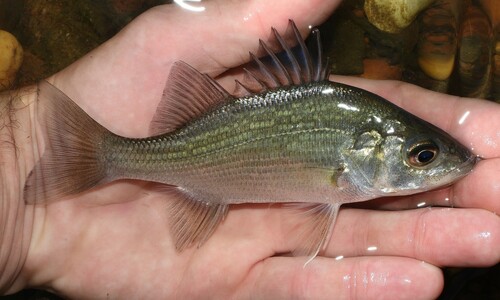
White Perch
Morone americana
A shimmering silver resident of coastal and inland waters, the White Perch is a social and hardy fish that brings dynamic movement to any underwater backyard camera. These adaptable temperate basses are a favorite for dockside observers and anglers alike.
Quick Identification
Size
7–10 inches (18–25 cm) in length; 0.5–1.5 lbs (0.2–0.7 kg) in weight, though some reach 19 inches.
Colors
Silvery-white to brassy sides with a dark olive-green or charcoal back; lacks the distinct horizontal stripes of its cousins.
Key Features
- Deep-bodied and laterally compressed
- Connected spiny and soft-rayed dorsal fins
- No distinct dark horizontal stripes
- Large, silver scales and slightly forked tail
When You’ll See Them
Behavior
In the backyard setting—specifically for those with waterfront property—White Perch are curious and active. They are known for 'patrolling' shorelines and man-made structures like docks and bulkheads. During the spring, their behavior becomes more frantic as they migrate into shallow freshwater streams to broadcast their eggs over sandy or rocky bottoms. They do not guard their nests, making them quite different from the sunfish or bass you might see in the same waters.
EverydayEarth exclusive
Camera Tips
Because they are opportunistic feeders, using a 'bait station' is the most effective way to keep a school in front of your lens. A mesh bag filled with crushed clams, canned corn, or dry cat food works wonders. Secure the bag approximately 24 to 36 inches away from the lens to ensure the fish remain in focus. Since White Perch are schooling fish, once the AI detects one, you are likely to get a flurry of activity as the rest of the group follows the scent trail.
Water clarity is your biggest challenge with this species. White Perch often stir up sediment while feeding on the bottom. To combat 'backscatter' (when camera lights reflect off dirt particles), position your external light source to the side of the camera rather than directly next to the lens. If you are using a camera with built-in infrared (IR), try to place it in an area with a slight current; the moving water will sweep away the clouds of silt they kick up, keeping your image crisp.
Seasonality plays a huge role in camera placement. In the spring (April–May), move your camera into shallower water, around 3 to 5 feet deep, to catch their spawning runs. As the summer heat sets in, White Perch will move to deeper, cooler holes during the day. During these months, set your AI triggers specifically for the 'golden hours'—the hour after sunrise and the hour before sunset—when the schools move from the deep water back into the shallows to feed along the bank.
Similar Species
Species that look similar or are commonly confused with White Perch.
Frequently Asked Questions
Record White Perch at your habitat
Connect a camera to start building your own species record — AI identifies every visitor automatically.