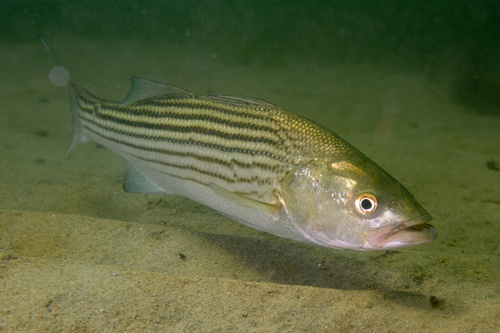
Striped Bass
Morone saxatilis
The Striped Bass is a silver-scaled icon of the Atlantic coast, celebrated by anglers and nature lovers alike for its power and striking patterns. Whether they are migrating up coastal rivers or patrolling suburban docks, these 'Linesiders' are the undisputed kings of the surf.
Quick Identification
Size
20–47 inches (50–120 cm); 10–40 lbs (4.5–18 kg), though trophy specimens can exceed 70 lbs.
Colors
Shimmering silver to olive-green back with a white belly; characterized by 7–8 prominent dark horizontal stripes.
Key Features
- 7–8 continuous dark horizontal stripes along the sides
- Two distinct dorsal fins, the first with sharp spines
- Lower jaw projects slightly forward
- Streamlined, powerful body shape
When You’ll See Them
Behavior
Striped Bass are highly energetic, migratory predators known for their impressive strength and schooling nature. As anadromous fish, they spend their adult lives in the salty waters of the Atlantic or coastal estuaries but travel far up freshwater rivers to spawn every spring. They are social hunters, often forming large schools that coordinate to drive baitfish toward the surface in high-energy feeding events known as 'blitzes.'
These fish are highly sensitive to their environment, particularly water temperature and dissolved oxygen. During the heat of the summer, they often retreat to deeper, cooler 'thermal refuges.' While they are wary of human presence in shallow water, they have adapted well to suburban environments, often congregating around bridge pilings, docks, and canal walls where artificial lights provide an easy advantage for hunting at night.
EverydayEarth exclusive
Camera Tips
Capturing Striped Bass on camera requires a specialized underwater approach, typically using a 'dock cam' or a waterproof action camera. If you live on a tidal canal or a freshwater lake, the ideal placement for your camera is 3 to 6 feet below the surface, mounted to a dock piling or a weighted tripod. Angle the lens slightly upward toward the surface or toward the 'shadow line' of a structure; Striped Bass are ambush predators that love to hover right where the dark water meets the light.
The most effective way to attract Striped Bass to your camera lens is through the use of light. Submersible green LED lights are incredibly effective at night; they draw in clouds of zooplankton and baitfish, which in turn attract the Striped Bass. Position your camera about 5 feet away from the light source, facing the edge of the glow. This setup allows you to see the silver flash of the 'Striper' as it darts through the light to snatch a meal without the fish being overexposed by the direct glare of the LED.
Because Striped Bass move in powerful, sudden bursts, use a high frame rate setting (60fps or higher) to avoid motion blur. If you are using an AI-powered camera, set it to trigger frequently during the change of tides, as the moving water triggers their feeding instincts. In river environments, ensure your camera is positioned in an eddy or behind a rock where the current is slower, as fish will often hold in these spots to conserve energy while waiting for food to drift by.
Lastly, be mindful of water clarity and maintenance. In coastal areas, the best footage is usually captured during 'slack tide' or high tide when clearer ocean water pushes into the estuaries. Algae and barnacles can quickly grow on your camera lens, so plan to clean the housing at least once a week to ensure your shots remain crisp. If you are monitoring a backyard canal, seasonal migrations in the spring and fall offer the best chance to see massive schools passing through at once.
Similar Species
Species that look similar or are commonly confused with Striped Bass.
Frequently Asked Questions
Record Striped Bass at your habitat
Connect a camera to start building your own species record — AI identifies every visitor automatically.