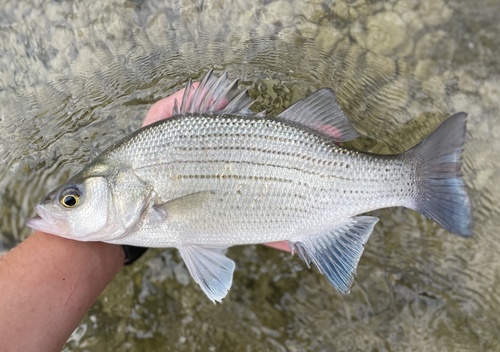
White Bass
Morone chrysops
A shimmering silver powerhouse of the inland waterways, the White Bass is famous for its dramatic spring migrations and high-energy feeding frenzies. These social predators offer a fascinating glimpse into the complex schooling behaviors of North American freshwater fish.
Quick Identification
Size
Typically 10-15 inches (25-38 cm) in length and weighing 1-3 lbs (0.45-1.36 kg), though trophy specimens can exceed 18 inches.
Colors
Brilliant silver-white sides with a dark olive to steel-gray back; characterized by several dark, narrow horizontal stripes that run the length of the body.
Key Features
- Two distinct and separated dorsal fins on the back
- Deep-bodied, silver profile with a white belly
- 6-10 dark horizontal stripes along the sides, with only one stripe reaching the tail
When You’ll See Them
Behavior
White Bass are highly social, gregarious fish that spend most of their lives in large schools. They are renowned for their aggressive 'feeding frenzies' where a school will drive smaller baitfish to the surface of the water, creating a visible 'boil' that can be seen from a distance. This behavior is most common during the heat of the summer when oxygen levels and baitfish activity are highest near the surface.
During the spring, their behavior changes as they become migratory. They leave the deep open waters of reservoirs and lakes to travel upstream into tributaries, rivers, and even small creeks to spawn. In these shallow environments, they are much more accessible to observation. While they are generally wary of humans, their focus on feeding and reproduction during the spring 'run' makes them less timid than other temperate bass species.
EverydayEarth exclusive
Camera Tips
Capturing high-quality footage of White Bass requires an underwater approach, making submersible trail cameras or 'fishing' cameras with recording capabilities the best choice. If you have a backyard dock or waterfront property, mount your camera at a depth of 3 to 6 feet, facing toward deeper water. Look for natural structures like submerged logs, large rocks, or even dock pilings, as White Bass will use these as ambush points when patrolling for baitfish.
To lure them into the camera's field of view, try installing a waterproof green or white LED light. These lights don't necessarily attract the bass directly, but they attract clouds of zooplankton and small minnows, which in turn brings the predatory White Bass in for a meal. For the best clarity, ensure your camera is positioned so the light source is slightly off-center to avoid 'backscatter' (the reflection of light off particles in the water).
During the spring spawning run, you can move your camera to shallower, moving water if you have access to a creek or riverbank. Position the camera in a 'slack water' area—a spot just outside the main current where fish rest before moving upstream. Angle the lens slightly upward to capture the shimmering silver of their scales against the sunlight filtering through the surface. Use a high frame rate (60fps if available) to capture their quick, darting movements without motion blur.
Finally, pay attention to the weather. White Bass are notoriously active just before a cold front moves in. If the barometric pressure is dropping, ensure your camera batteries are fresh and the storage is empty, as this is when you are most likely to see massive schools moving through your area.
Similar Species
Species that look similar or are commonly confused with White Bass.
Frequently Asked Questions
Record White Bass at your habitat
Connect a camera to start building your own species record — AI identifies every visitor automatically.