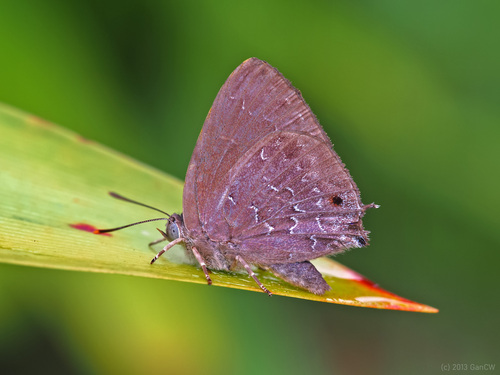
Silver Streaked Acacia Blue
Zinaspa todara
A shimmering jewel of the forest edge, the Silver Streaked Acacia Blue is famous for the brilliant metallic streaks that adorn its wings. This fast-moving butterfly is a master of camouflage and a delight for backyard observers with a keen eye.
Quick Identification
Size
Wingspan of 30-38 mm (1.2-1.5 inches)
Colors
Metallic purple-blue upperside in males; brownish upperside in females. Both sexes feature pale brown undersides with distinct silver-white transverse streaks.
Key Features
- Distinctive silver-white streaks across the underside of the wings
- Vibrant metallic purple upperside visible during flight
- Small, delicate tails on the hindwings
- Orange-crowned black eyespot near the tail on the underside
When You’ll See Them
Behavior
The Silver Streaked Acacia Blue is a high-energy lycaenid butterfly known for its rapid, jerky flight patterns. It is most often found in the vicinity of its primary host, the Acacia tree. Males are particularly territorial and can be observed perched on high leaves, darting out to chase away intruders or investigate potential mates before returning to the same sunlit spot.
When at rest, this species almost always keeps its wings tightly closed, relying on the intricate silver and brown patterns on its underside to blend in with the bark and dappled light of the forest canopy. They are avid sun-bathers, often seen in the early morning tilting their bodies to catch the first rays of light, which provides them with the necessary thermal energy for their active lifestyle.
EverydayEarth exclusive
Camera Tips
To successfully capture the Silver Streaked Acacia Blue, camera placement is critical. Because these butterflies are highly specialized, you should position your camera within three to five feet of an Acacia tree or a nectar-rich flowering bush like Lantana. Since they are small and fast, set your camera at eye level (about 4-5 feet) and ensure the focus is fixed on a specific branch or cluster of flowers where they are likely to land. Use a high-speed trigger setting to account for their sudden movements.
Lighting plays a massive role in the quality of your footage. The 'silver' in their name refers to reflective scales that can easily overexpose in direct, midday sunlight. For the best results, aim your camera toward a spot that receives bright but filtered morning sun. This 'soft' light highlights the metallic purple of the wings if they happen to open them and brings out the pearlescent quality of the silver streaks on the underside without creating harsh glares.
Consider setting up a 'puddling station' to draw them down from the canopy. This involves creating a small patch of damp sand mixed with a tiny amount of sea salt or compost. Placing a trail camera on a mini-tripod just 6-12 inches off the ground near this station can provide stunning close-up shots that are impossible to get when they are fluttering high in the trees. During the hotter months, these butterflies frequently descend to such spots to take in essential minerals.
Finally, check your camera's burst mode or video frame rate. Because of their erratic flight, a single photo often results in a blur. Setting your device to take 3-5 photos per trigger—or recording in 60fps video—will ensure you get at least one frame where the butterfly is perfectly still and the silver markings are in sharp focus. If your camera has AI-insect detection, ensure it is set to the highest sensitivity due to the species' small size.
Similar Species
Species that look similar or are commonly confused with Silver Streaked Acacia Blue.
Frequently Asked Questions
Record Silver Streaked Acacia Blue at your habitat
Connect a camera to start building your own species record — AI identifies every visitor automatically.