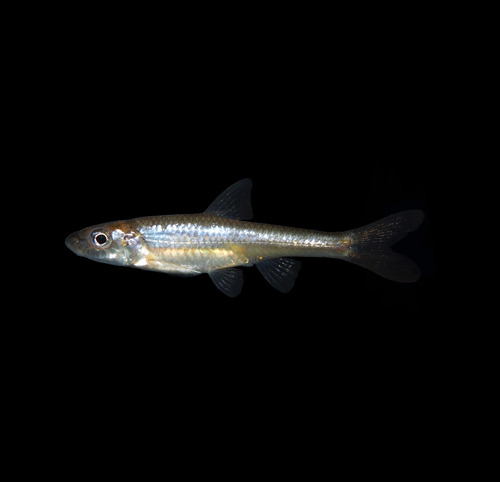
Silverjaw Minnow
Ericymba buccata
The Silverjaw Minnow is a shimmering treasure of the stream bed, easily recognized by the unique 'silver windows' on its jaw that act as high-tech vibration sensors. This fascinating bottom-dweller is a master of the sandy shallows, turning every backyard creek into a miniature world of exploration.
Quick Identification
Size
2 to 4 inches (5 to 10 cm) in length; weighing less than 0.1 oz (3 grams)
Colors
Shimmering silver sides with a pale olive or straw-colored back; the belly is pure white; distinct pearlescent 'windows' appear on the lower jaw
Key Features
- Translucent sensory chambers visible on the lower jaw and cheeks
- Flattened belly adapted for resting on sandy stream bottoms
- Large, upward-tilted eyes
- Mid-body lateral line that is nearly straight
When You’ll See Them
Behavior
The Silverjaw Minnow is a specialized bottom-dweller that spends its life hovering just above or resting directly on the sandy substrates of clear streams. Unlike many minnows that swim in the middle of the water column, these fish are 'benthic,' meaning they are closely tied to the floor of their habitat. They are social creatures that often form small schools, moving in synchronized bursts as they navigate the current.
What truly sets them apart is their unique sensory system. Those 'silver' patches on their jaws are actually enlarged mucocavities—sensory organs that allow them to detect the tiny vibrations of prey moving beneath the sand. This evolutionary adaptation makes them exceptionally efficient hunters in murky or turbulent conditions where sight might be limited. Despite their specialized nature, they are generally peaceful and are rarely bothered by human activity nearby, provided the water remains clear and the sand undisturbed.
EverydayEarth exclusive
Camera Tips
To capture high-quality footage of the Silverjaw Minnow, you will need an underwater action camera or a specialized 'creek cam' setup. Because these fish stay near the bottom, position your camera only 2 to 4 inches above the substrate. Angle the lens slightly downward toward a patch of clean sand. If you are placing a camera in a backyard stream, look for 'runs'—areas where the water is moving steadily but not turbulently—as this is where Silverjaws love to congregate to feed.
Natural lighting is your best friend when filming this species. The 'silver' in their name comes from reflective plates on their jaw which are best captured during peak daylight hours when the sun is directly overhead. Avoid using heavy artificial lights at night, as these can wash out the delicate pearlescent details of their anatomy. If the water is deep enough, a polarizing filter on your lens can help eliminate surface glare and provide a much clearer view of the fish's distinctive jaw chambers.
To draw them into the frame, you don't necessarily need traditional bait. A very effective 'wildlife hack' for Silverjaw Minnows is to gently disturb the sand just upstream of your camera. This mimics the movement of prey and releases organic scents into the current, often drawing a curious school into the field of view within minutes. If you do use bait, a tiny amount of crushed freeze-dried tubifex worms placed in a mesh bag anchored to the bottom can keep them in front of the lens for extended periods.
Set your camera to a high frame rate, such as 60fps or 120fps. Minnows are 'twitchy' swimmers, and standard frame rates often result in a blur when they dart. A higher frame rate allows you to use slow-motion during playback to see the fascinating way they use their mouths to sift through the sand. Ensure your focus is fixed; autofocus often struggles with floating debris in a stream, so locking the focus on a specific rock or piece of wood in the foreground will ensure the fish are sharp when they swim past.
Similar Species
Species that look similar or are commonly confused with Silverjaw Minnow.
Frequently Asked Questions
Record Silverjaw Minnow at your habitat
Connect a camera to start building your own species record — AI identifies every visitor automatically.